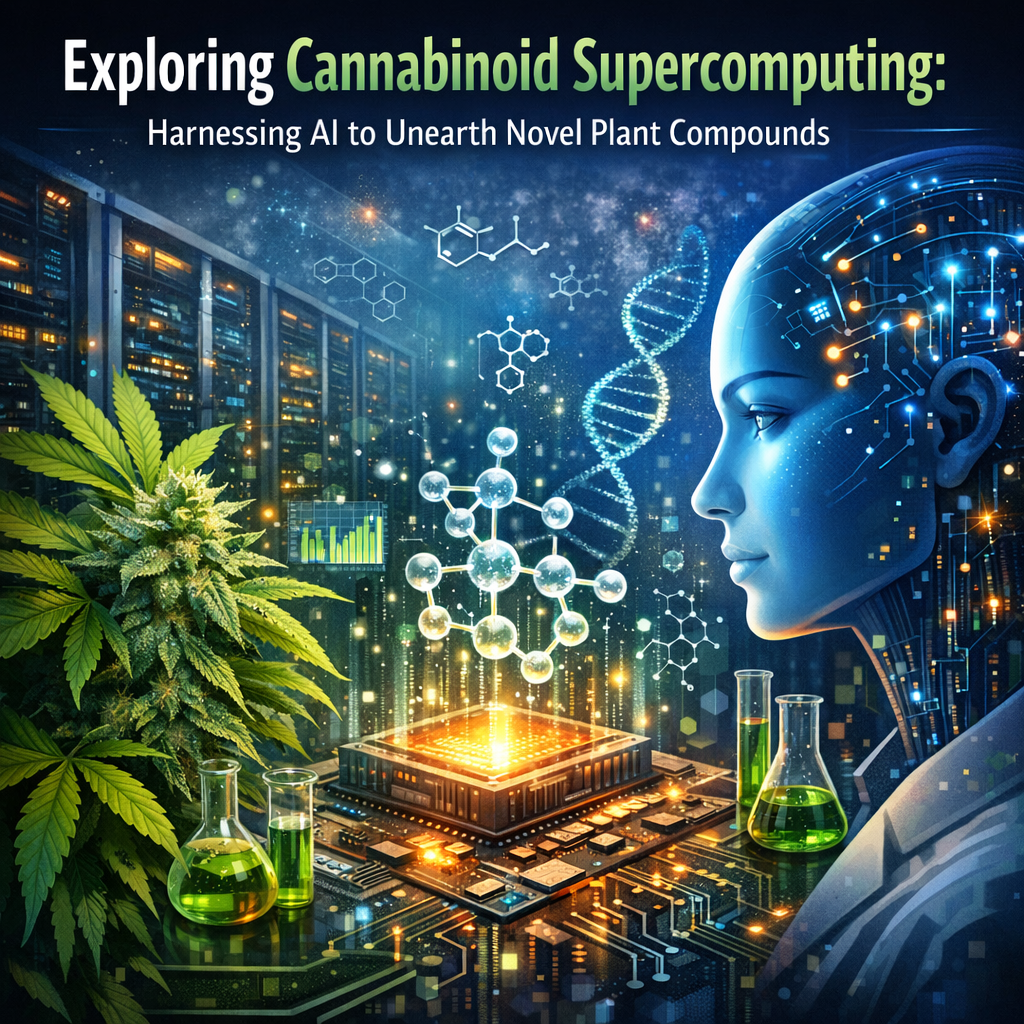
Exploring Cannabinoid Supercomputing: Harnessing AI to Unearth Novel Plant Compounds
Introduction
In the ever-evolving world of cannabis research, innovation is more than just a buzzword—it’s a relentless pursuit of deeper understanding and groundbreaking discoveries. At the crossroads of technology and botany stands “cannabinoid supercomputing,” a cutting-edge method that leverages artificial intelligence (AI) to delve into the intricacies of the cannabis plant. As the industry expands, there’s an increasing demand for novel compounds with potential therapeutic benefits. However, the rich tapestry of cannabinoids and terpenes existing within cannabis strains has made it a daunting challenge to catalog and fully comprehend each element using traditional methods.
Enter supercomputing and AI. These powerful tools have revolutionized fields from pharmaceuticals to astronomy, and now they’re poised to transform cannabis research. Supercomputing allows researchers to perform billions of calculations per second, swiftly sifting through complex data sets to identify trends and relationships that remain hidden to the human eye. When applied to cannabis, this means researchers can potentially identify new cannabinoids, understand their biosynthesis, predict interactions with the human endocannabinoid system, and assess therapeutic potential—all at an unprecedented pace.
The implications of this technological convergence are profound. With AI-driven insights, researchers are not only identifying but also engineering new plant compounds tailored for specific medical applications, from chronic pain management to mental health treatments. Additionally, growers can harness this technology to optimize plant breeding, ensuring strains are cultivated with desired characteristics like higher yield, pest resistance, or specific cannabinoid profiles. The goal is to bridge gaps in knowledge while paving the way for a new era of targeted cannabinoid therapeutics.
The fusion of cannabis science and AI is not just a theoretical concept but a rapidly progressing reality. The cannabis industry stands on the brink of a monumental shift, empowered by insights gleaned through supercomputing prowess, and the possibilities are as diverse and promising as the plant itself.
Features
Numerous studies illustrate the transformative potential of AI in cannabis research. For instance, a groundbreaking study led by researchers at the University of British Columbia employed advanced machine learning algorithms to analyze cannabinoid and terpene profiles across various cannabis strains. The AI model swiftly identified new compounds and predicted unknown interactions with the endocannabinoid system (source: [ScienceDaily](https://www.sciencedaily.com/releases/2019/07/190723134441.htm)). These insights imbue researchers with a powerful tool to embark on new avenues for therapeutic applications.
Moreover, AI-driven platforms like IBM’s Watson have ventured into cannabis research, utilizing natural language processing and data analysis to decipher complex biochemical interactions within the plant. This approach aids in identifying compounds of interest and recognizing their potential effects. Such technological advances enable researchers to hypothesize how new cannabinoids might interact with human receptors, opening doors to novel treatments for conditions ranging from epilepsy to anxiety disorders (source: [IBM Research Blog](https://www.ibm.com/blogs/research/2020/02/cannabis-research-ai/)).
Professional researchers are not the only beneficiaries of AI in cannabis. The technology is also empowering cannabis cultivators. An AI-powered analysis of plant genetics can quickly inform growers of optimal breeding strategies to enhance certain features, like cannabinoid potency or flowering time. For example, Phylos Bioscience offers genomic mapping that uses AI to help breeders identify genetic markers for specific traits, enabling more efficient development of strains with desired qualities (source: [Phylos](https://www.phylos.bio/)).
From a medical standpoint, institutions such as the Salk Institute are utilizing AI to study how cannabinoids can play a role in combating diseases like Alzheimer’s. By understanding plant-genome interactions, researchers can predict which cannabinoids are beneficial for neurological health, potentially leading to breakthrough therapies (source: [Salk Institute](https://www.salk.edu/news-release/cannabinoids-remove-plaque-forming-alzheimers-proteins-from-brain-cells/)).
Conclusion
As cannabis research journeys into the realm of supercomputing and artificial intelligence, the potential to revolutionize both medical treatments and cultivation practices is immense. By unveiling new cannabinoid compounds and understanding their interactions within the human body, we stand at the forefront of a cannabis renaissance. These promising breakthroughs promise not just to enhance our scientific knowledge, but also to pave the way for innovative, targeted therapies that can improve countless lives. The fusion of cannabis and AI is more than a scientific endeavor—it’s a testament to human ingenuity at the intersect of technology and nature.
—
Concise Summary: The integration of supercomputing and AI into cannabis research is paving the way for groundbreaking discoveries and medical advancements. By rapidly processing vast data sets, AI can identify new cannabinoids, understand their interactions, and aid in developing targeted therapies. This technology extends beyond research, assisting growers in optimizing breeding strategies. Institutions like the Salk Institute and companies like IBM are leveraging AI to explore therapeutic potentials, marking a transformative shift in the industry and unlocking a new era of cannabinoid therapeutics. The synthesis of AI with cannabis science exemplifies the promising future of this innovation-driven field.