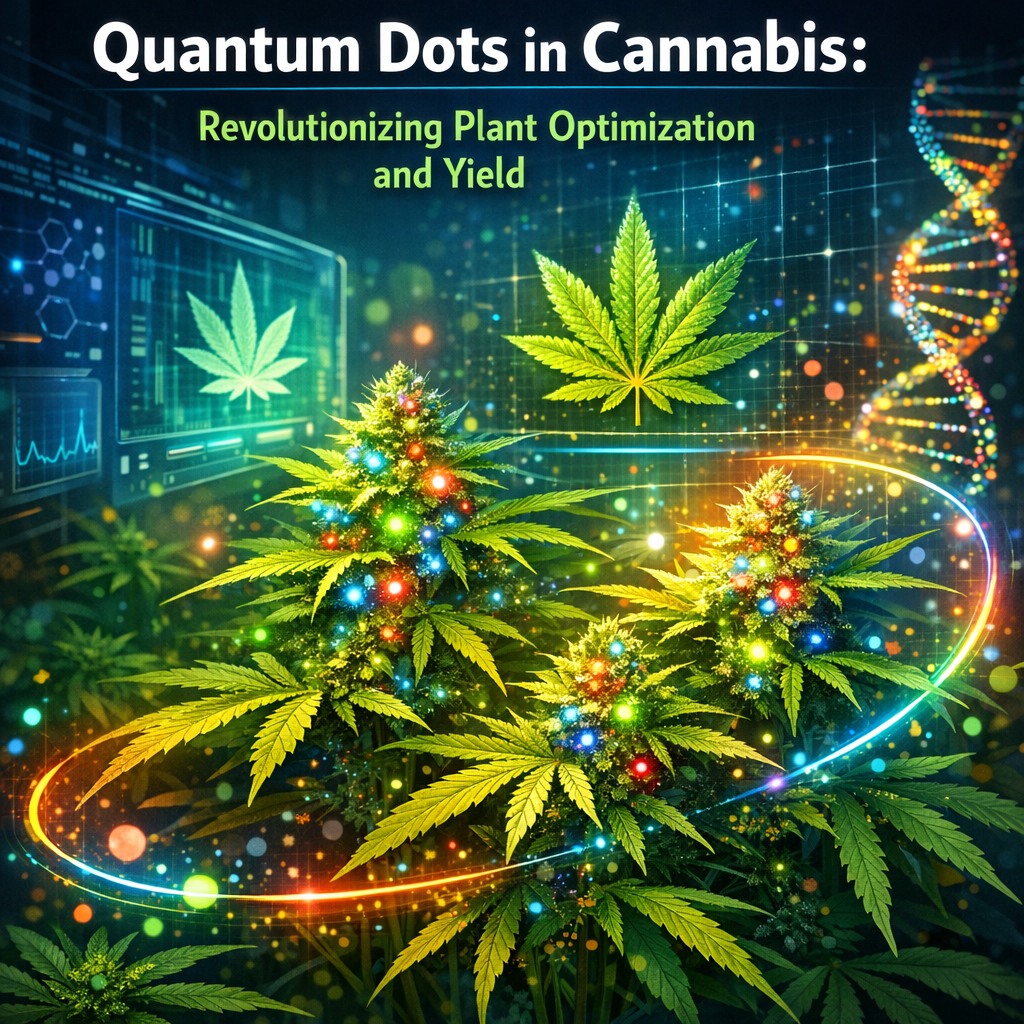
Quantum Dots in Cannabis: Revolutionizing Plant Optimization and Yield
Introduction
In the ever-evolving world of cannabis cultivation, innovation is a constant companion as growers and scientists work hand in hand to push boundaries and increase efficiency. One groundbreaking advancement catching the eye of the agricultural community is the use of quantum dots—tiny semiconductor particles that possess unique chemical and physical properties. These nano-sized wonders have demonstrated incredible potential to transform various industries, and their application in cannabis cultivation is no exception.
Quantum dots have been a focus of scientific research since the 1980s, but it’s only recently that their benefits are being harnessed for agricultural purposes. These nanocrystals measure a mere 2-10 nanometers in diameter, yet they have the power to manipulate light in revolutionary ways. One critical attribute of quantum dots is their tunable luminescent qualities; by altering their size, scientists can change the color of light a quantum dot emits. This characteristic is not only fascinating but also immensely useful in agriculture.
In cannabis cultivation, light plays a critical role in plant growth and development. The process of photosynthesis depends on the plant’s ability to absorb light and convert it into energy. The traditional approach has been to manipulate light exposure through various lighting systems such as high-pressure sodium (HPS) and light-emitting diodes (LEDs). Quantum dots can potentially surpass these conventional methods by offering a customized spectrum of light that can be fine-tuned to optimize plant growth.
The introduction of quantum dots in cannabis cultivation could revolutionize the industry by increasing yields and enhancing the quality of the plant. These materials can provide more precise control over the light spectrum, improving the efficiency of the photosynthetic process and potentially speeding up growth cycles. Moreover, quantum dots are designed to maximize light uptake while minimizing energy waste, which can result in substantial energy savings and an environmentally friendly approach to cultivation. As research progresses, the promise of quantum dots in providing specific wavelengths that target distinct stages of growth—such as vegetative and flowering phases—could greatly benefit growers both large and small.
Features
The impact of quantum dots in agriculture, while new, is supported by a growing body of research. Studies have demonstrated that quantum dots can significantly enhance light absorbance and promote growth in plants beyond just cannabis. In agriculture, one specific study showed a 20% increase in productivity when plants were treated with quantum dots to adjust the light spectrum (Source: [SpringerLink](https://link.springer.com/article/10.1007/s11051-018-4361-z)). This enhanced photosynthesis means faster growth cycles and ultimately greater yields.
In the domain of cannabis, these advancements are particularly promising. Cannabis light absorption peaks in the blue and red parts of the spectrum, and quantum dots could be crafted to emit exactly these wavelengths. This tailored approach ensures that no energy or light is wasted, making photosynthesis more efficient and reducing the overall cultivation footprint. As energy consumption is a significant concern in cannabis cultivation—where lighting can account for up to 50% of energy costs—this innovation offers a sustainable solution (Source: [ScienceDirect](https://www.sciencedirect.com/science/article/pii/S2212429219309038)).
Moreover, quantum dots offer the potential of a reduced environmental impact. As pressure mounts for industries to adopt more eco-friendly practices, the reduced energy use translates into less carbon emissions, making cannabis cultivation more sustainable. This is not just advantageous from an ecological perspective but also from an economic standpoint, as energy reductions could lead to lower operational costs for growers.
Additionally, the use of quantum dots may contribute to healthier plants. By providing a customized light spectrum, these nanocrystals aid the plants in reaching their genetic potential, which could mean higher concentrations of cannabinoids, terpenes, and other beneficial compounds. This translates to not just a greater yield but also a superior product that meets the rising demands for high-quality cannabis.
Conclusion
Quantum dots represent a fascinating development in the realm of cannabis cultivation, offering a glimpse into the future of optimized plant growth and yield. By harnessing the power of these tiny yet mighty particles, cannabis growers can look forward to a new era of precision agriculture. As research continues to unveil more about their capabilities, quantum dots promise to be a transformative force, aligning sustainability with productivity, and charting a new course for cannabis cultivation.
Summary:
Quantum dots are emerging as groundbreaking tools in cannabis cultivation, offering customizable light spectrums to enhance photosynthesis, improve plant growth, and optimize yields. These nanocrystals allow precise control of light exposure, surpassing traditional lighting methods like HPS and LEDs. Studies demonstrate a 20% productivity boost with quantum dot-enhanced light, promising faster growth cycles and lower energy costs. Beyond efficiency, their tailored light spectra promote higher chemical concentrations, elevating plant quality. As research progresses, quantum dots promise a sustainable progression in cultivation, aligning ecological benefits with economic advantages for the cannabis industry.