The Cellular Biology of Trichome Development: Transcriptomic Insights into Cannabinoid and Terpene Biosynthesis
Introduction
In the vast world of **cannabis cultivation**, understanding the minute details of plant biology can provide a substantial edge in optimizing plant yield and the desired profile of **cannabinoids** and **terpenes**. At the heart of this complex botanical science are **trichomes**—those tiny, hair-like structures that play an essential role in the production of cannabinoids and terpenes. These **glandular hairs** are not only responsible for the characteristic aroma and flavor of each **strain** but also for the psychoactive and medicinal properties of cannabis.
**Trichomes** are divided into different types, such as **bulbous**, **capitate-sessile**, and **capitate-stalked**, each varying in size and function. The **capitate-stalked trichomes** are the most active in terms of cannabinoid and terpene production. Understanding the **cellular biology** behind trichome development and biosynthesis has profound implications for both consumers and professionals in the cannabis industry.
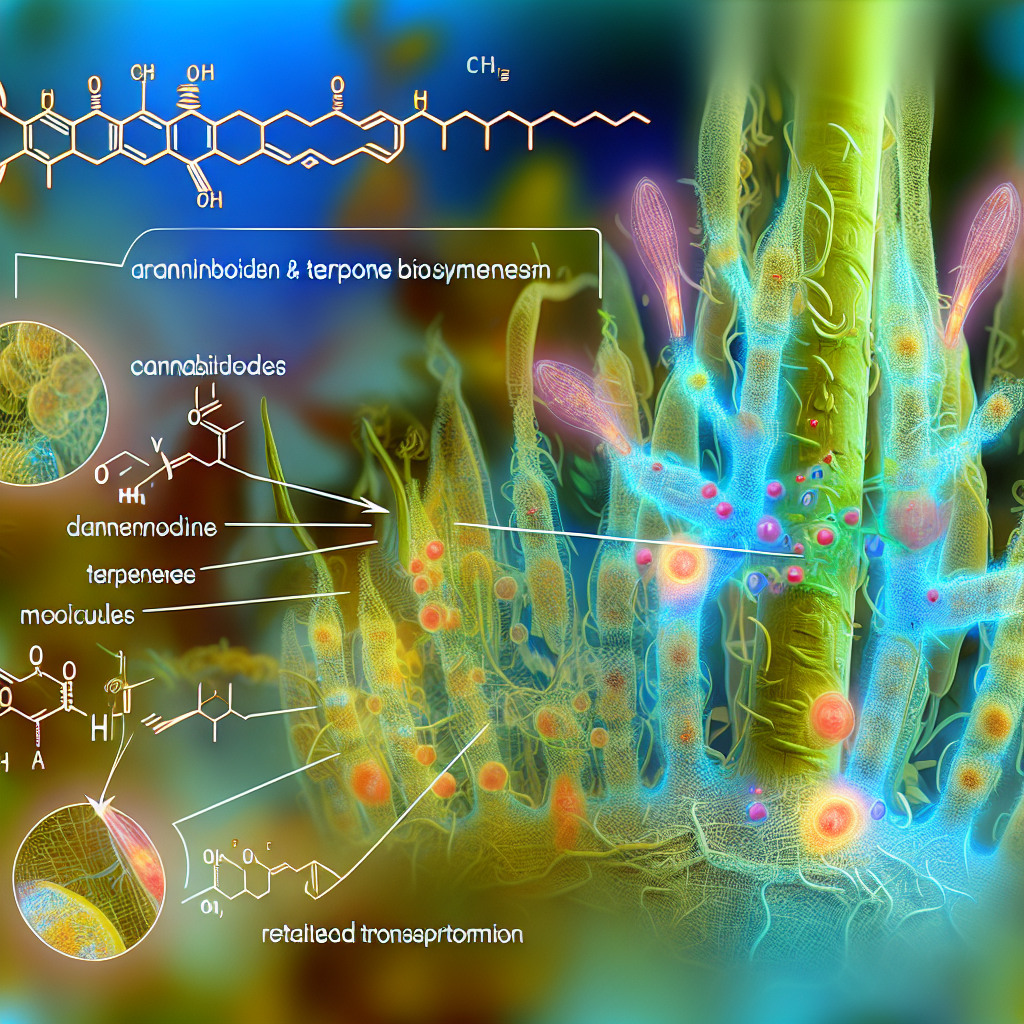
Recent advances in **transcriptomic technologies**—where the complete set of **RNA transcripts** produced by the genome is studied—have unraveled detailed insights into the molecular mechanics behind trichome development. By examining the **transcriptome** of cannabis, researchers can identify which genes are actively involved in the complex pathways leading to cannabinoid and terpene synthesis. This information not only sheds light on how these compounds are synthesized but also opens the door to **genetic interventions** that could enhance or modify the profile of cannabis plants.
With increasing interest in **medical cannabis** and its therapeutic potential, understanding the nuances of trichome development becomes even more critical. This knowledge could lead to the production of strains tailored for specific therapeutic effects, enhancing the plant’s efficacy in treating various ailments. Moreover, the eco-friendly bioengineering of plants to maximize desired compounds without heavy reliance on chemical inputs aligns with **sustainable agriculture** goals—a key consideration for the conscientious consumer.
Features
Recent studies highlight the significant progress in dissecting the molecular pathways involved in trichome development and the biosynthesis of cannabinoids and terpenes. One pivotal study used **transcriptomic tools** to analyze active genes during different stages of trichome development, revealing key insights into the biochemical processes involved. Such research underscores the complexity of **metabolic pathways**, identifying several critical genes responsible for the production of enzymes essential for cannabinoid synthesis, such as **THCA synthase** and **CBDA synthase** [source](https://www.ncbi.nlm.nih.gov/pmc/articles/PMC7019976/).
Another groundbreaking investigation focused on the role of **transcription factors**—proteins that help turn specific genes on or off by binding to nearby DNA. Researchers discovered that specific transcription factors are highly active in trichomes, regulating the expression of genes involved in terpene biosynthesis [source](https://www.frontiersin.org/articles/10.3389/fpls.2020.567819/full). This discovery provides a potential target for altering terpene profiles through genetic manipulation or selective breeding. For instance, adjusting the expression of these transcription factors could lead to an increase in certain desirable terpenes, known for their therapeutic effects or consumer appeal.
Furthermore, the **environmental factors** influencing trichome production, such as light, temperature, and humidity, have been a focus of several studies. It is well-documented that optimizing these conditions can significantly affect the density and biochemical output of trichomes. Innovative research continues to explore how manipulating these variables can lead to enhanced production of target cannabinoids and terpenes, promising new avenues for both growers and researchers seeking to maximize plant output naturally [source](https://www.mdpi.com/2073-4395/10/12/1940).
Conclusion
The unraveling of the cellular biology of trichome development through transcriptomic studies stands as a cornerstone for advancing the cannabis industry’s understanding of cannabinoid and terpene biosynthesis. By continuing to delve deeper into these molecular pathways, we not only enhance the potential for targeted cultivation strategies but also foster a future where cannabis can be tailored for specific consumer needs and medical applications. As this field of research grows, so too will the opportunities to innovate and refine the cultivation of this remarkable plant, ensuring its place as both a sustainable crop and a powerhouse of therapeutic potential.
**Concise Summary**
In the cannabis industry, trichomes play a vital role in producing cannabinoids and terpenes, influencing aroma, flavor, and therapeutic properties. Recent advancements in transcriptomic technologies have provided insights into the genetics behind trichome development, offering ways to genetically enhance or modify cannabis strains. This research not only benefits consumers by tailoring strains for specific therapeutic uses but also aligns with sustainable agriculture goals. Studies have highlighted the role of transcription factors and environmental factors in trichome production, paving the way for innovative cultivation methods that maximize desired compound output.