The Therapeutic Application of CBDA (Cannabidiolic Acid) – Serotonin Receptor Agonism
Introduction
In recent years, the cannabis industry has seen significant growth in both the recreational and medicinal sectors. While cannabinoids such as THC and CBD have long dominated public and scientific discussions, lesser-known compounds like CBDA (cannabidiolic acid) are gaining attention for their unique and promising therapeutic potential. CBDA, the raw, acidic precursor to CBD, is found abundantly in the live cannabis plant prior to decarboxylation, a process triggered by heat that converts it into CBD.
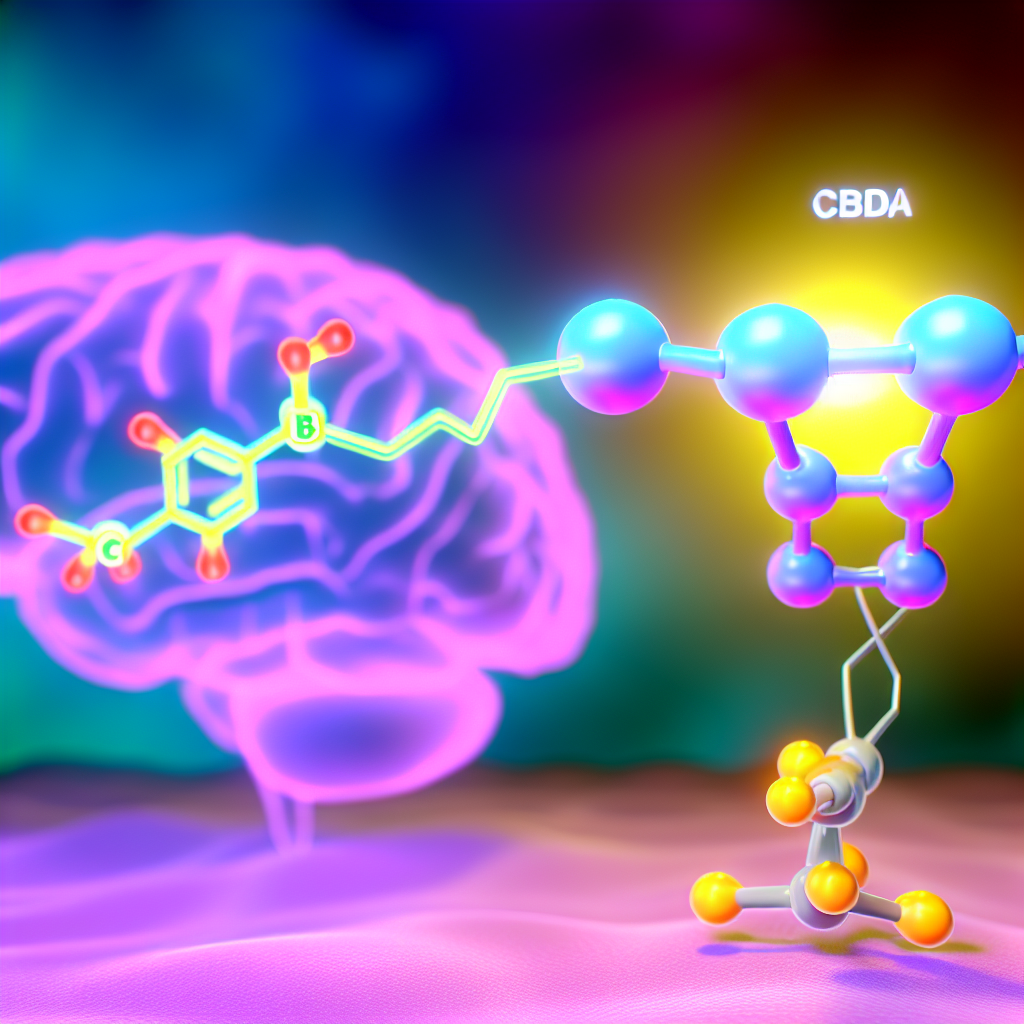
Historically considered pharmacologically inactive, CBDA is now being re-evaluated as research uncovers its role in modulating key biochemical systems in the body. One of the most intriguing avenues of research relates to CBDA’s function as a selective serotonin receptor (5-HT1A) agonist—a receptor critical in regulating mood, anxiety, nausea, and sleep cycles. This discovery has powerful implications for both clinical and over-the-counter cannabinoid-based therapies, especially as demand grows for plant-based health solutions that provide effective relief without psychoactive effects.
CBDA’s potential benefits go beyond anecdotal evidence. Groundbreaking studies support its anti-nausea, anti-inflammatory, and anti-anxiety effects due to its action on the serotonin system. Patients dealing with chemotherapy-induced nausea, anxiety disorders, and even epilepsy may benefit significantly from formulations including CBDA. Furthermore, CBDA has exhibited notably higher bioavailability than its more famous counterpart, CBD. That means it may require smaller doses to achieve therapeutic effects, increasing its appeal in the wellness industry.
As regulation evolves and more clinical trials emerge, staying informed about CBDA’s pharmacological properties and its specific effect on brain chemistry will be crucial for both healthcare providers and informed consumers. A better understanding of CBDA’s interaction with the serotonin neurotransmitter system could open new pathways for the management of stress-related conditions, chronic pain, and other health concerns.
Scientific and Clinical Insights Into CBDA and Serotonin Receptor Activity
While CBD garners most of the attention in medical cannabis research, CBDA is stepping into the spotlight thanks to emerging data showing it acts as a highly potent and selective agonist of the 5-HT1A receptor. This receptor is central to modulating serotonin levels, which influence mood stability, perception, and physical discomfort like nausea.
A landmark study published in the British Journal of Pharmacology demonstrated that CBDA reduced nausea in animal models more effectively than CBD. Conducted on rats and shrews, CBDA significantly suppressed acute nausea and vomiting by enhancing 5-HT1A receptor activity. Notably, CBDA outperformed traditional antiemetic medications, even at relatively low doses. These findings suggest serious potential for CBDA as an anti-nausea solution, especially useful for patients undergoing chemotherapy.
Further delineating CBDA’s importance is its strong binding affinity for the 5-HT1A receptor, which could explain its efficacy in reducing anxiety and promoting emotional balance. Unlike SSRIs, which inhibit serotonin reuptake over extended periods to increase brain serotonin levels, CBDA appears to directly stimulate serotonin activity at the receptor site. Early trials have shown that CBDA significantly lowers anxiety-like behaviors in animals, offering a potential natural alternative to conventional anti-anxiety pharmaceuticals.
A 2018 study from the University of Guelph examined CBDA’s remarkably high absorption rates, or bioavailability, in the gastrointestinal system. It revealed that CBDA is absorbed more efficiently than CBD, making it ideal for oral supplements, tinctures, and nano-emulsified formulations. This higher bioavailability means therapeutic effects can be achieved at lower concentrations, reducing potential side effects and treatment costs.
Additionally, CBDA’s therapeutic applications may expand with advances in nanotechnology. Innovative delivery mechanisms, such as liposomal delivery and nanoencapsulation, may allow even more precise targeting of serotonin receptors. This could maximize efficacy for patients with neuropsychiatric disorders, inflammatory bowel diseases, or nausea-prone conditions, creating highly specific cannabinoid-based interventions.
The NIH recognizes the importance of cannabinoid interaction with serotonin systems, especially in addressing neuropsychiatric issues. Meanwhile, other research published by Frontiers in Pharmacology suggests that CBDA could augment future treatment regimens for both psychiatric symptoms and chronic inflammation.
Conclusion
CBDA has emerged as a compelling cannabinoid with unique pharmacological capabilities, especially regarding serotonin receptor modulation. Its interaction with the 5-HT1A receptor opens up a variety of treatment possibilities, notably for patients suffering from chemotherapy-induced nausea, chronic anxiety, mood disorders, and neurological conditions. Its superior bioavailability compared to CBD further enhances its viability in therapeutic formulations.
As cannabinoid science continues to evolve, CBDA represents one of the most promising frontiers for natural, non-psychoactive treatment protocols. Rigorous clinical trials and cross-disciplinary research will be vital in translating this promise into standard practice across hospitals, wellness centers, and homes.
Stay updated with future developments in cannabinoid-based therapeutic innovations at bluntys.com.
References
1. The British Journal of Pharmacology – Anti-nausea properties of CBDA
2. University of Guelph – CBDA Bioavailability Study
3. NIH – Cannabinoid interaction with serotonin systems
4. Frontiers in Pharmacology – Cannabinoids and neuropsychiatric disorders
Concise Summary
CBDA (cannabidiolic acid) is gaining scientific recognition for its potent effect on the serotonin 5-HT1A receptor, offering powerful anti-nausea, anti-anxiety, and anti-inflammatory benefits. Unlike CBD, CBDA is the raw form found in live cannabis and provides superior bioavailability, enhancing its therapeutic efficacy at lower doses. Prominent studies highlight its role in reducing nausea in animal models and suggest potential for treating mood disorders and chronic pain. With growing interest in non-psychoactive, plant-based remedies, CBDA is positioning itself as a vital compound in the evolution of cannabinoid-driven healthcare.