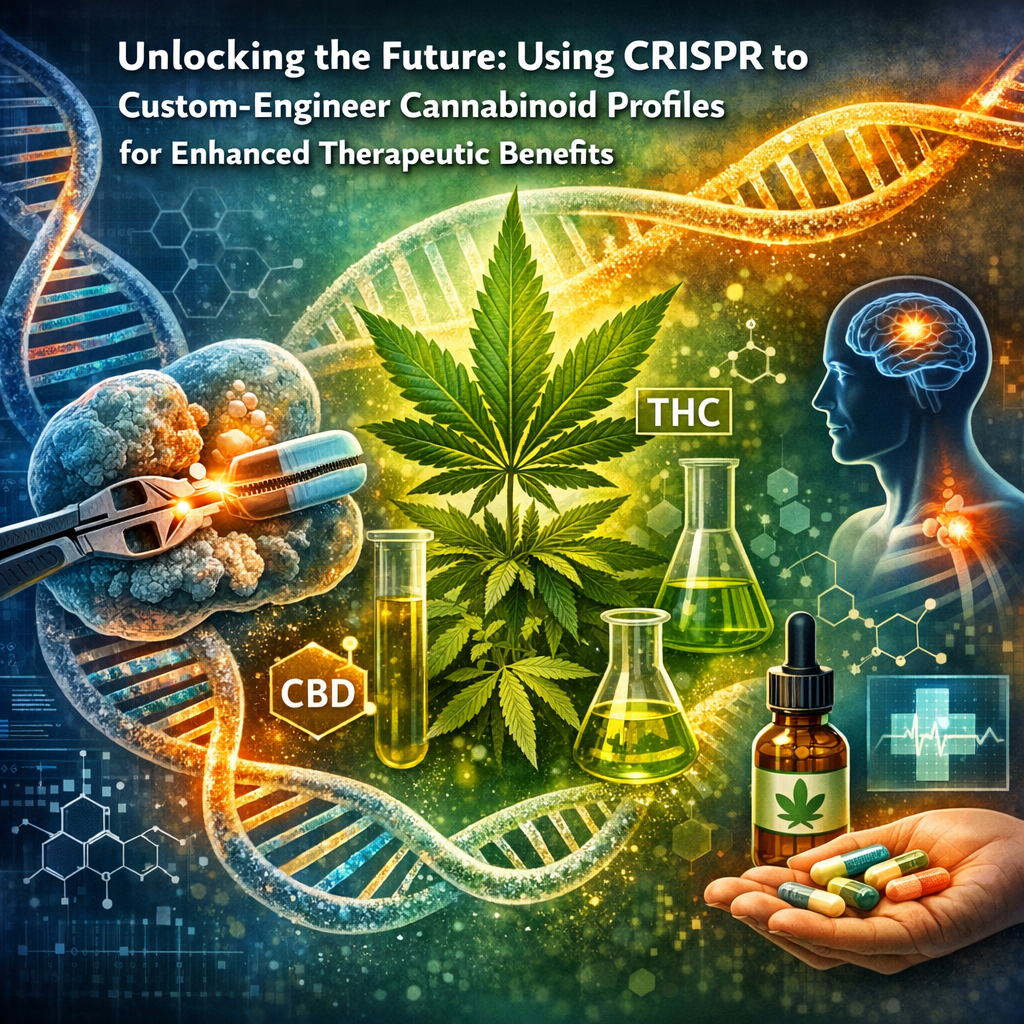
Unlocking the Future: Using CRISPR to Custom-Engineer Cannabinoid Profiles for Enhanced Therapeutic Benefits
In recent years, our understanding of cannabis and its myriad compounds has evolved, unlocking vast potential for therapeutic applications. Central to this evolution is the plant’s diverse array of cannabinoids, which interact with the human body’s endocannabinoid system to produce various effects. Cannabinoids such as THC and CBD have gained prominence for their roles in pain relief, anti-inflammation, and mental health support. However, cannabis is not just about THC and CBD; it comprises over 100 different cannabinoids, each with unique properties and potential benefits.
Now, enter CRISPR (Clustered Regularly Interspaced Short Palindromic Repeats), a cutting-edge genetic editing technology that promises to revolutionize how we can optimize cannabis for medicinal use. By utilizing CRISPR, scientists can precisely modify the cannabis genome, paving the way to custom-engineer cannabinoid profiles tailored to specific therapeutic needs. This breakthrough offers potential not only for enhancing the efficacy of cannabis-derived treatments but also for reducing unwanted side effects by minimizing or eliminating undesired cannabinoids.
Imagine a future where specific cannabinoids are amplified to target precise ailments – such as CBG for anti-inflammatory purposes, or CBC for its analgesic properties – without the psychoactive effects associated with THC levels. By manipulating the genetic sequences that influence these cannabinoid levels, researchers can guide cannabis cultivation into a new era of precision medicine.
This genetic tailoring could further reduce the trial-and-error aspect for patients seeking cannabis-based therapies. Patients often face a perplexing array of strains and strengths in pursuit of the right balance to address their symptoms. With CRISPR, producing plants with consistent and predictable cannabinoid output becomes a reality. This could greatly enhance the efforts of both cultivators and medical professionals as they seek to deliver the most effective cannabis formulations to patients and consumers.
The technology’s possibilities are as promising as they are vast, offering a unique intersection between advanced genomics and traditional therapeutic practices. As such, exploring CRISPR’s potential in cannabis cultivation represents a significant stride toward personalized medicine and consumer wellness.
Features:
The intersection of cannabis cultivation and CRISPR gene-editing technology holds the promise of a paradigm shift in the production of cannabinoid-rich plants for medical and recreational use. A number of professional and medical studies have illuminated the vast potential of this approach.
One landmark study published in Nature demonstrated CRISPR’s potential to precisely manipulate metabolic pathways in cannabis plants. By targeting key enzymes involved in the biosynthesis of cannabinoids, such as THCA and CBDA synthase, scientists aim to selectively increase or decrease the production of specific cannabinoids. This ability to fine-tune the concentration and variety of cannabinoids could significantly enhance the plant’s therapeutic efficacy.
In a study conducted by the American Journal of Botany, researchers focused on modifying the pentatricopeptide repeat (PPR) proteins, which are pivotal in mediating gene expression for the development of desired phenotypic traits in plants. By employing CRISPR technology to target these proteins in cannabis, it becomes feasible to alter flowering times, increase resistance to pests or environmental stressors, and optimize cannabinoid compositions.
Further advances are being explored in the field of gene knockout strategies, involving the deletion or disabling of specific genes to observe the resultant changes in cannabinoid profiles. This technique was highlighted in a recent issue of Trends in Plant Science, where researchers successfully modulated the expression of non-psychoactive cannabinoids to examine potential therapeutic implications.
Moreover, ethical and regulatory considerations play a critical role as the industry moves forward with gene-editing technologies. As highlighted by a research review in the Annual Review of Genomics and Human Genetics, there’s an ongoing discussion about the ecological consequences and safety of introducing genetically modified crops.
These studies and reviews underscore not only the transformative potential of integrating CRISPR into cannabis research and cultivation but also the complexity and careful consideration required to navigate this burgeoning field. As more scientific evidence emerges, the cannabis industry is poised to redefine therapeutic landscapes and consumer experiences through genetic innovation.
Conclusion:
The potential for using CRISPR technology to customize cannabinoid profiles marks an exciting frontier in cannabis research and cultivation. By harnessing the power of this groundbreaking genetic tool, we can tailor-make cannabis strains for specific therapeutic outcomes, enhance the plant’s medicinal efficacy, and reduce unintended side effects. As science continues to advance, this innovative approach heralds an era where cannabis-based treatments become more personalized, reliable, and accessible to meet diverse patient needs.
Concise Summary
CRISPR technology offers exciting opportunities for the cannabis industry by enabling precision gene-editing to optimize cannabinoid profiles for specific therapeutic benefits. By manipulating the cannabis genome, researchers can produce strains with tailored effects, enhancing medicinal efficacy and minimizing side effects. This approach transforms cannabis cultivation, facilitating consistent and predictable cannabinoid output, reducing patient trial-and-error, and advancing precision medicine. As CRISPR research progresses, it underscores a future of personalized cannabis-based treatments, intertwining advanced genomics with traditional therapeutics for improved patient care and consumer experience.