**
Why the “Entourage Effect” Is Obsolete: Building Targeted Cannabinoid Synergies with AI-Curated Receptor Maps
**
**
Introduction:
**
In recent years, the **cannabis industry** has been abuzz with discussions about the “**entourage effect**”—the theory that **cannabinoids** and **terpenes** work synergistically to enhance each other’s effects. This concept has played a pivotal role in guiding consumer choices and product formulations. However, the rapid advancement of **artificial intelligence (AI)** and **machine learning** in pharmaceuticals is disrupting traditional paradigms. **AI-curated receptor maps** represent the next frontier in cannabis research, offering the possibility of building precise, targeted cannabinoid synergies that could render the broad-stroke approach of the entourage effect obsolete.
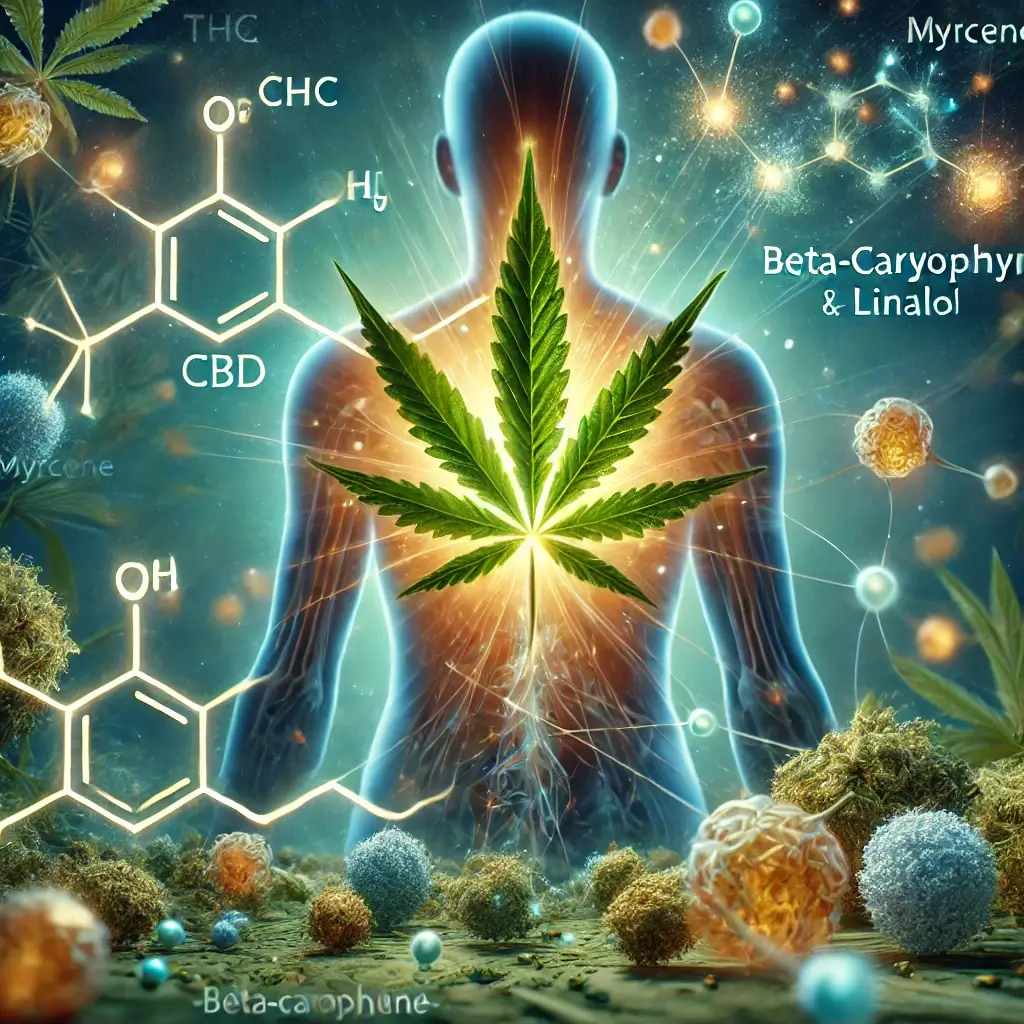
The entourage effect, while widely discussed, lacks robust scientific evidence, largely due to the complexity of cannabis compounds and their interactions with the human body. **Cannabinoids** like **THC** and **CBD** bind to different receptors within the **endocannabinoid system (ECS)**, a complex signaling network involved in regulating physiological and cognitive processes. Moreover, **terpenes**, the aromatic compounds found in cannabis, are thought to modulate these interactions, further complicating the matrix of potential effects. While the idea of the entourage effect acknowledges this complexity, the theory is often more of a general guiding principle rather than a precise science.
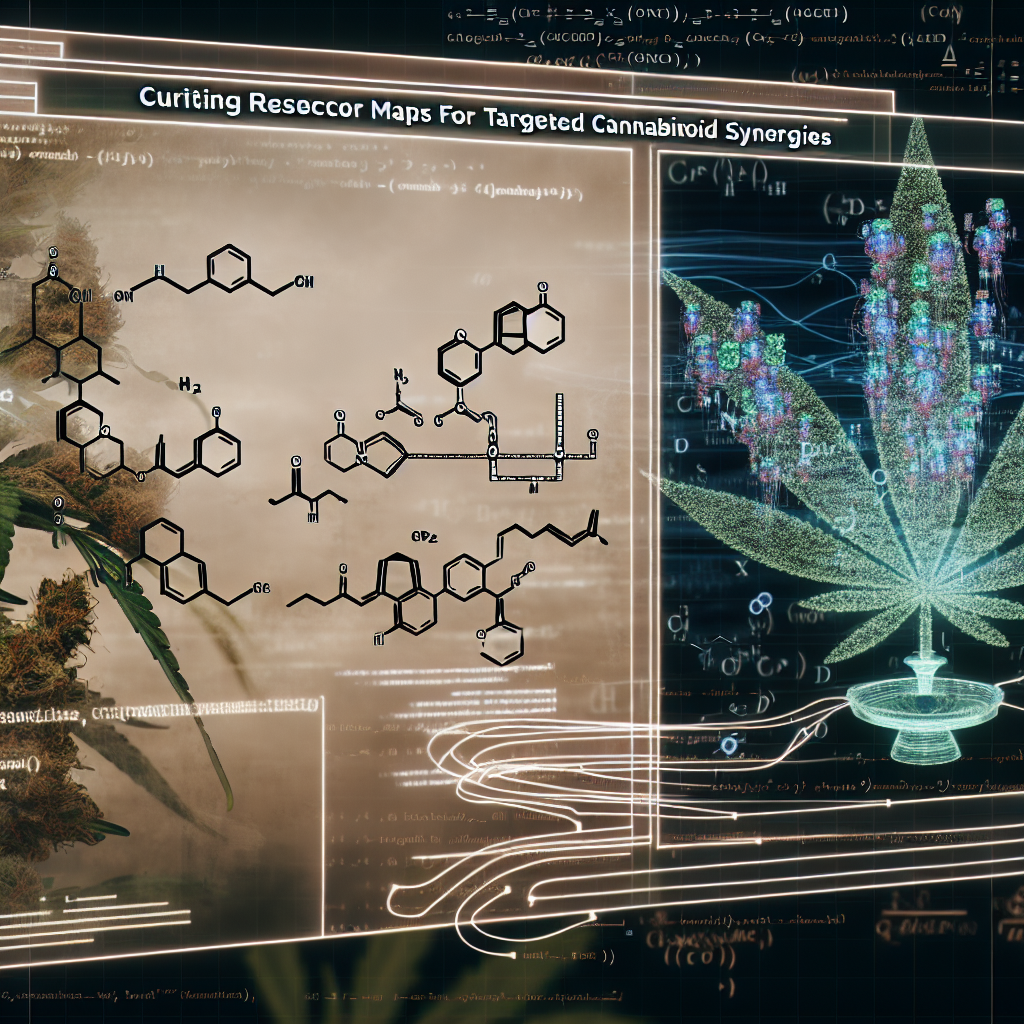
In contrast, **AI-curated receptor maps** involve leveraging computational power to synthesize massive datasets on cannabinoid and receptor interactions. AI algorithms analyze clinical and biochemical data to map out how different cannabinoids interact with specific receptors in the ECS and other pathways. This approach allows for a more granular understanding of the pharmacodynamics involved, identifying precise combinations of cannabinoids and terpenes that could lead to desired therapeutic outcomes or consumer experiences.
The implications of this technology are far-reaching. For consumers, it promises products tailored to more accurately target specific health conditions or desired effects. For cannabis professionals, it opens new avenues for research, product development, and regulatory compliance. As AI continues to evolve, it is poised to redefine how we understand and harness the power of cannabis, potentially replacing broad, trial-and-error methods with precise, scientifically-backed formulations.
**
Features:
**
In the realm of therapeutic cannabis research, several studies are beginning to pave the path toward AI and machine learning applications. A notable example is the use of deep learning algorithms in drug discovery, such as those developed by **BenevolentAI** and **Insilico Medicine**. These platforms have demonstrated the ability to predict the interactions between molecules and biological targets, a capacity now being adapted for cannabis research.
One such study, published in [*Nature Communications*](https://www.nature.com/articles/s41467-018-07348-6), highlights a novel neural network model capable of predicting the affinity of molecules for a wide array of receptors. This data-driven approach can be directly applied to cannabis compounds, predicting which cannabinoids interact most effectively with particular receptors to achieve a desired result.
In a related development, researchers at Israel’s **Technion** have been pioneering efforts in mapping cannabinoid receptor interactions using AI, as detailed in research published in [*Scientific Reports*](https://www.nature.com/articles/s41598-020-65302-1). By cataloging the interactions between different cannabinoids and terpenes with varied receptors, these studies aim to create a comprehensive receptor map that could vastly improve targeted therapeutic applications.
Moreover, AI is not just limited to understanding interactions but also in predicting efficacy. Algorithms can analyze patient data to ascertain which cannabinoid profiles are most effective for particular conditions, potentially leading to personalized medicine—a concept traditionally elusive in natural therapies.
While AI-curated receptor maps promise to revolutionize cannabis science, significant hurdles remain. The complexity of biological systems, regulatory challenges, and ethical considerations regarding AI use in healthcare must be addressed to harness the full potential of this technology. Nonetheless, the medical community is poised on the brink of a new era where tailored cannabinoid synergies could drastically improve quality of life and therapeutic outcomes.
**
Conclusion:
**
As AI and **machine learning** continue their inexorable advance in cannabis research, the traditional concepts we rely on, like the entourage effect, will likely evolve. While the entourage effect has served as a helpful heuristic in the past, **AI-curated receptor maps** promise precision, customization, and efficacy that could redefine our understanding of cannabinoid synergies. The cannabis industry’s future may soon be guided by data-driven insights, ushering in a new era of tailored cannabis experiences and therapies.
**Concise Summary:**
The cannabis industry is transitioning from the broadly defined **entourage effect** to **AI-curated receptor maps** which allow for precise, targeted cannabinoid synergies. While the entourage effect lacks strong evidence, AI harnesses computational power to analyze cannabinoid interactions, opening possibilities for tailored therapeutic outcomes. Breakthroughs in AI applications like those by **BenevolentAI** and **Technion** signify this shift. Despite potential hurdles, AI is set to revolutionize cannabis research, enhancing how we understand and utilize cannabis with precision-based approaches, potentially replacing traditional trial-and-error methods.
**References:**
1. [Nature Communications](https://www.nature.com/articles/s41467-018-07348-6)
2. [Scientific Reports](https://www.nature.com/articles/s41598-020-65302-1)