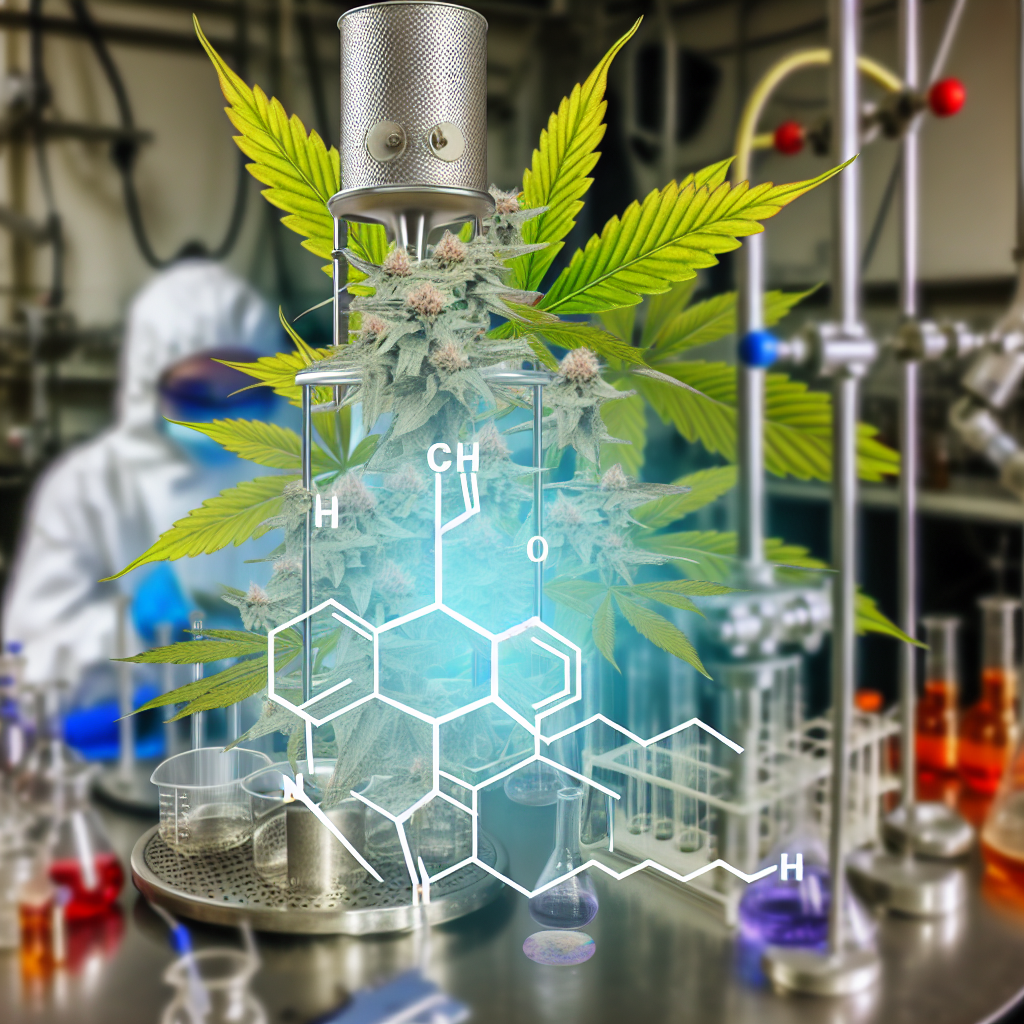
Cannabis as a Biosynthetic Factory: Harnessing Microbial Fermentation to Produce Rare Cannabinoids
Introduction
Cannabis has played a significant role in human culture for centuries and is now recognized for its profound therapeutic potential. The plant contains over 100 different cannabinoids, which impact the endocannabinoid system to create varied effects. While mainstream cannabinoids like THC and CBD are well-known, there’s a growing interest in rare cannabinoids such as cannabigerol (CBG), cannabinol (CBN), and tetrahydrocannabivarin (THCV) due to their potential medical benefits.
Obtaining these rare cannabinoids traditionally is challenging because of their low natural presence in cannabis plants. This is where modern biosynthetic technologies, specifically microbial fermentation, become transformative. By leveraging engineered microorganisms like yeast or bacteria, scientists can produce these desirable compounds more efficiently, sustainably, and at a larger scale.
The approach of using cannabis as a biosynthetic factory could dramatically change cannabinoid production and open up opportunities for novel therapeutic advancements. This biotechnology provides a pathway for discovering and mass-producing rare cannabinoids to meet unmet medical needs. The shift from being peripheral elements to central players in cannabis research could herald new therapeutic applications and personalized medicine opportunities.
As technology advances in genetic engineering and synthetic biology, microbial fermentation offers a promising solution for synthesizing valuable cannabinoids, increasing the efficiency and reducing the limitations posed by traditional cultivation methods. This exploration into using cannabis as a biosynthetic powerhouse is a significant stride in cannabis research, blending creativity and science to enhance cannabinoid production capabilities.
Features
Scientific research is broadening the horizon for how microbial fermentation can tailor cannabinoid production. Notably, a [2019 study](https://nature.com/articles/s41587-019-0031-4) published in *Nature* demonstrated successful cannabinoid production with engineered yeast. Conducted by researchers at the University of California, Berkeley, the study was revolutionary, showcasing how altered yeast strains can convert sugar into cannabinoids, including THC and CBD.
The abundant possibilities emerge from producing cannabinoids that are nearly impossible to otherwise extract efficiently. For example, cannabinoids like CBG, THCV, and CBDV show potential in treating conditions such as cancer, metabolic disorders, and neurodegenerative diseases. A report in the *British Journal of Pharmacology* discusses these minor cannabinoids’ potential pharmacological effects [BJP Study](https://bpspubs.onlinelibrary.wiley.com/doi/full/10.1111/bph.15040).
Moreover, the economic and environmental benefits of microbial fermentation are noteworthy. Traditional cultivation of cannabis requires significant resources like energy and water and is affected by geographic and climatic conditions. Fermentation, on the other hand, can be performed in controlled settings, offering consistency and reducing production’s ecological impact.
Medical cannabis companies are also investing in this innovative approach. For instance, biotech firms like GW Pharmaceuticals utilize biosynthetic methods to produce cannabinoids for experimental medicine. Products like Epidiolex, whose CBD is derived from biosynthetic sources, demonstrate the practicality and potential in attaining [FDA approval](https://www.onlinelibrary.wiley.com/doi/full/10.1002/jbmr.3687).
As research advances, producing rare cannabinoids through microbial fermentation could become standard practice, democratizing access to cannabinoid therapies and accelerating cannabis research.
Conclusion
Microbial fermentation stands as a beacon of innovation within the rapidly evolving cannabis industry. By unlocking the potential of cannabinoids via synthetic biology, researchers and industry professionals can explore new treatment possibilities. This growing field signifies a future where the therapeutic potential of cannabis is fully realized, offering hope to patients and healthcare providers globally.
Concise Summary
The exploration of cannabis as a biosynthetic factory through microbial fermentation represents a significant innovation in cannabinoid production. By utilizing engineered microorganisms, scientists can efficiently synthesize rare cannabinoids, such as CBG, CBN, and THCV, which hold promise for various medical applications. This approach is not only more sustainable and scalable than traditional extraction but also opens new therapeutic pathways and could democratize access to cannabinoid-based therapies. As genetic engineering and synthetic biology progress, microbial fermentation is set to become a key standard in addressing unmet medical needs within cannabis research.