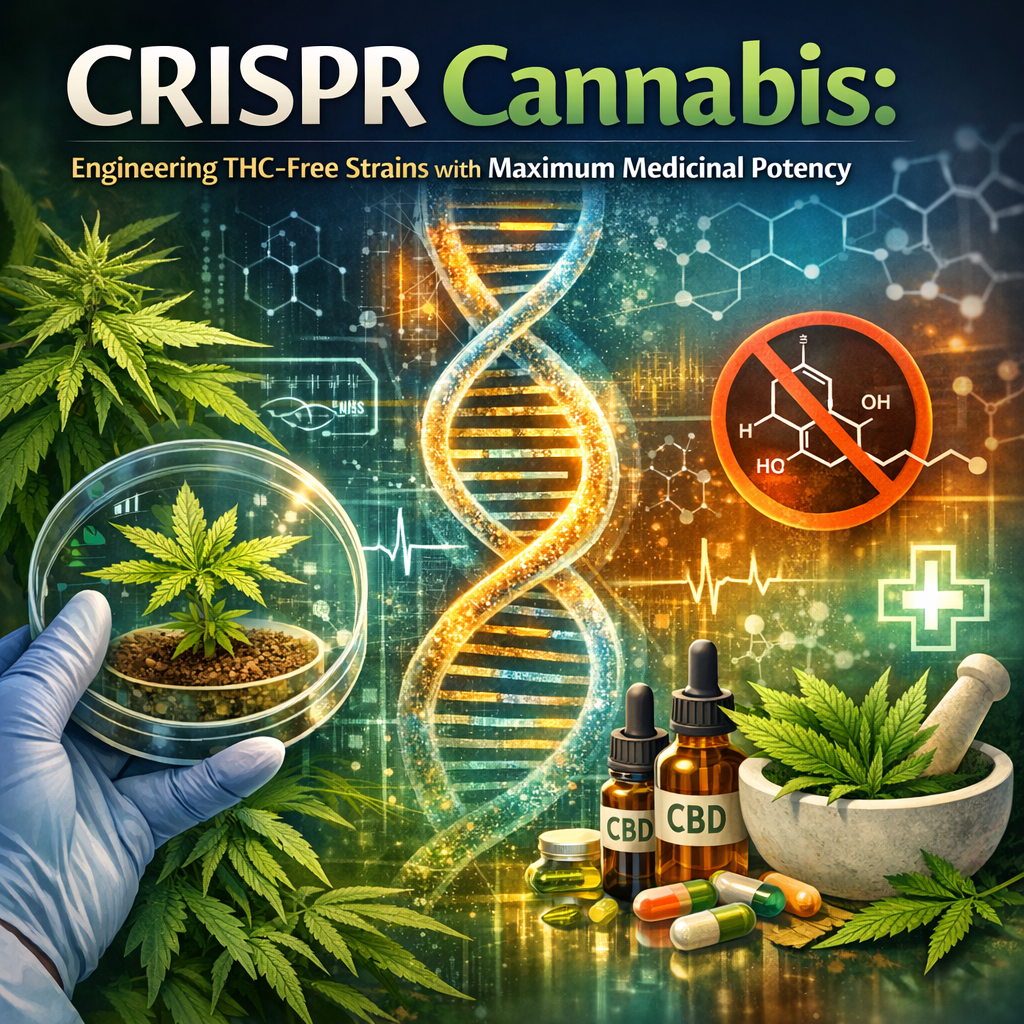
CRISPR Cannabis: Engineering THC-Free Strains with Maximum Medicinal Potency
Introduction
In recent years, the cannabis cultivation industry has experienced groundbreaking changes due to advancements in genetic engineering. At the forefront is CRISPR-Cas9 technology, a revolutionary tool allowing precise DNA editing, fostering innovative cannabis strain developments. With increasing public interest in cannabis’s medicinal benefits, researchers aim to enhance therapeutic efficacy while minimizing psychoactive effects. A promising application is engineering THC-free strains with maximal medicinal potency.
Tetrahydrocannabinol (THC) is the psychoactive component in cannabis responsible for the “high.” However, for patients and healthcare practitioners interested in therapeutic potential, reducing or eliminating THC while enhancing other beneficial cannabinoids is a priority. Cannabidiol (CBD), cannabigerol (CBG), and other non-psychoactive cannabinoids offer potential in treating chronic pain, anxiety, epilepsy, and inflammation. By genetically engineering strains to produce zero THC and higher concentrations of these compounds, researchers aim to provide safer, non-intoxicating health management options.
CRISPR-Cas9 technology offers unprecedented precision in genome editing, enabling modifications in genes responsible for cannabinoid production. By “turning off” genes related to THC production, researchers can develop strains that exclude THC but retain a spectrum of valuable cannabinoids. This has significant implications for both the medicinal cannabis market and regulatory landscapes, allowing products aligned with therapeutic needs and legal THC standards.
Features
Recent studies demonstrate CRISPR’s potential in cannabis cultivation. A pioneering study in Nature Plants showcased CRISPR-Cas9’s capability to disrupt enzymes involved in THC biosynthesis. By targeting the THCA synthase gene, researchers reduced THC to undetectable levels while preserving cannabinoids like CBD and CBG, crucial for patients needing cannabis-based treatments without psychoactive effects.
CRISPR technology’s implications extend beyond THC reduction. Researchers are enhancing the biosynthesis of cannabinoids with therapeutic benefits. Increasing certain gene expressions can boost CBD and minor cannabinoid production, addressing health conditions. This capability allows breeders to develop strains catering to specific medical needs, like CBG-rich strains for eye health and neuron protection or CBD-rich strains for anti-inflammatory properties.
Beyond cannabinoids, CRISPR can improve other cannabis cultivation facets. Genetic modifications may develop strains with increased pest and disease resistance, enhanced growth rates, and optimized environmental adaptability. This promises higher yields and cost savings for growers, contributing to sustainable, environmentally friendly cultivation.
However, CRISPR’s adoption in cannabis is not without challenges. Regulatory hurdles, ethical considerations, and public acceptance play roles in the path forward. As the scientific community gathers data on CRISPR-engineered cannabis safety and efficacy, stakeholders must remain informed and engaged in discussions on its application and regulation. Potential benefits are enormous but require careful ethical practice and consumer safety considerations.
Conclusion
At the intersection of cannabis and genetic engineering, CRISPR technology’s promise in creating THC-free strains with enhanced medicinal potency is transformative. Unlocking cannabinoids’ full therapeutic potential without THC’s psychoactive effects paves the way for a new era of medicinal cannabis meeting patient and medical professional needs. As research progresses, maintaining informed dialogue on ethical, regulatory, and scientific developments will shape future cannabis therapy.
References
1. Nature Plants – [Link](https://www.nature.com/articles/s41477-019-0468-4)
2. National Center for Biotechnology Information – [Link](https://www.ncbi.nlm.nih.gov/pmc/articles/PMC6334252/)
3. Journal of Cannabis Research – [Link](https://jcannabisresearch.biomedcentral.com/)
Summary:
CRISPR-Cas9 technology is revolutionizing cannabis cultivation by enabling precise genetic modifications that enhance therapeutic cannabinoids while eliminating psychoactive THC. This breakthrough offers promising medical applications, potentially aiding treatments for chronic conditions without intoxication. The advancements promise sustainability, with enhanced plant growth and resilience. However, addressing regulatory, ethical, and public acceptance challenges is essential for responsible implementation. Through informed dialogue and scientific exploration, CRISPR holds transformative potential for medicinal cannabis, paving the way for innovative, patient-centered therapies.