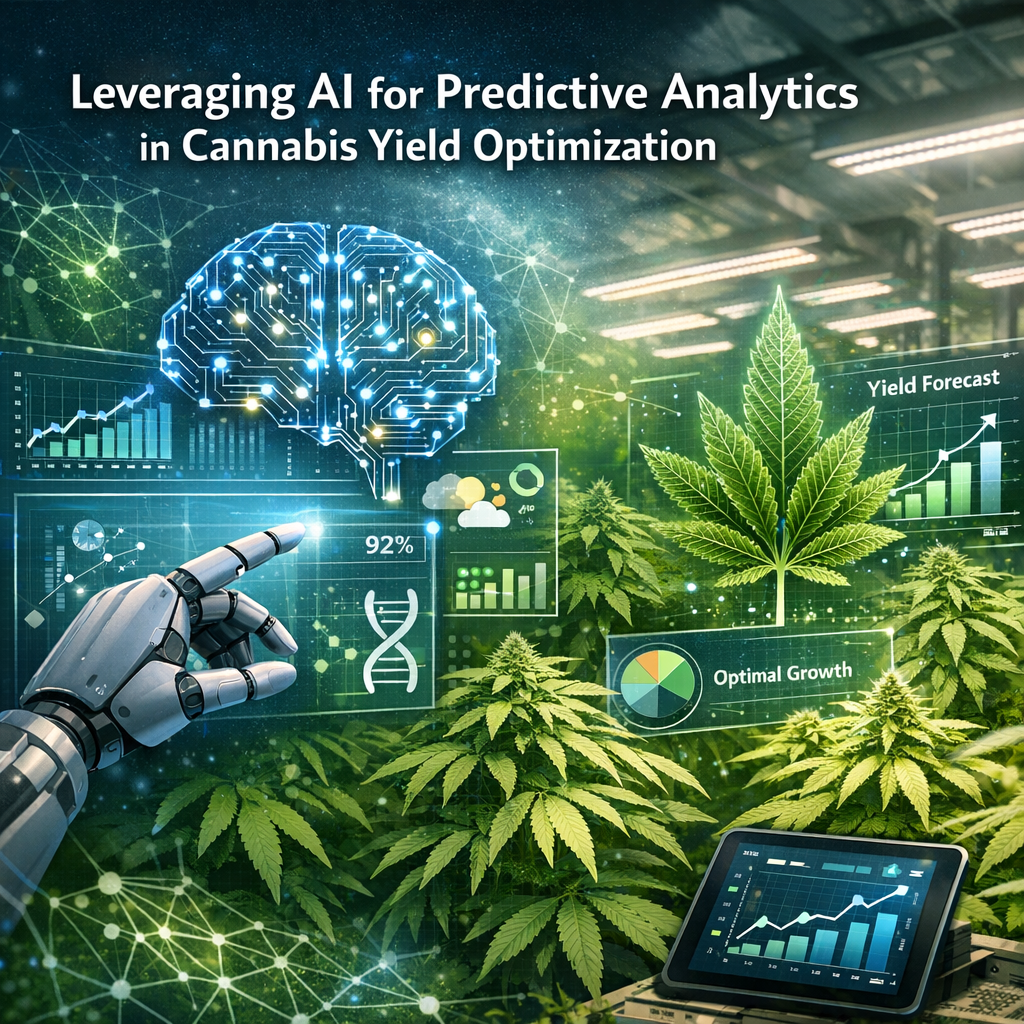
Leveraging AI for Predictive Analytics in Cannabis Yield Optimization
The intersection of artificial intelligence (AI) and agronomy is revolutionizing the way we cultivate plants, with the cannabis industry at the forefront of this technological advancement. As countries continue to legalize cannabis for medicinal and recreational use, the demand for efficient, sustainable, and reliable cultivation techniques has intensified. Enter AI-driven predictive analytics—a cutting-edge solution for optimizing cannabis yields that promises to transform agricultural practices.
Cannabis cultivation is a complex process involving numerous variables, from light exposure and soil nutrients to humidity levels and pest control. Traditional methods rely on growers’ expertise and intuition, combined with a trial-and-error approach that can be time-consuming and costly. However, the advent of AI technologies has introduced a more precise method of managing these factors through data collection and analysis. Predictive analytics utilizes historical data to forecast future outcomes, allowing cultivators to make informed decisions on their growing practices.
AI algorithms can process vast amounts of information gleaned from sensors, cameras, and other monitoring equipment set up in cultivation facilities. This information includes environmental conditions, plant characteristics, and growth patterns. Through machine learning, AI can identify trends and correlations not immediately apparent to the human eye. For example, an AI system might determine the optimal nutrient mix for a particular strain of cannabis or predict how changing light cycles will affect flowering times.
As the cannabis market becomes more competitive, leveraging AI for predictive analytics offers a significant edge. By optimizing yields and reducing resource expenditures, producers can lower costs while maintaining high-quality outputs. This efficiency is attractive to business owners and aligns with environmental sustainability goals by minimizing waste and resource use. In an industry still defining its best practices, AI-driven insights provide a pathway toward precision agriculture that ensures both economic and ecological benefits.
Features: Professional and Medical Studies
The application of AI in agriculture is supported by numerous studies highlighting its potential in optimizing crop yields. A research study published in *[Nature Machine Intelligence](https://www.nature.com/)* demonstrated AI’s capacity to predict plant growth and optimize cultivation conditions effectively. This study emphasized AI’s role in enhancing yield prediction accuracy by up to 25% over traditional methods.
Another relevant study from a collaboration between the [University of California, Davis](https://www.ucdavis.edu/) and the cannabis firm Humboldt Brothers focused on using AI-based models to predict optimal harvest times and maximize THC and CBD concentrations. The study found that AI algorithms could significantly improve the alignment of harvests with peak cannabinoid levels, increasing the potency and quality of cannabis products.
On the medical front, AI’s role in yield optimization extends to ensuring the consistent production of medical-grade cannabis. This consistency is critical for patients who rely on cannabis for relief from conditions such as chronic pain or epilepsy. A study published in the journal *[Frontiers in Plant Science](https://www.frontiersin.org/journals/plant-science)* explored AI’s potential in standardizing cannabinoid profiles, thus supporting the production of therapeutic strains that meet stringent medical standards.
Furthermore, AI-driven predictive analytics are proving invaluable in pest and disease management within cannabis cultivation. By analyzing patterns and predicting outbreaks, AI systems allow growers to take preventative measures, reducing reliance on chemical pesticides and enhancing plant health. This approach not only improves yield quality but also aligns with the increasing consumer demand for organically grown cannabis products.
The integration of AI into cannabis agriculture is a testament to the sector’s capacity for innovation. It showcases how predictive analytics can bridge the gap between technological potential and practical application, paving the way for a future where cannabis production is more efficient, predictable, and sustainable.
Conclusion
As the cannabis industry continues to expand, adopting AI for predictive analytics in yield optimization presents a promising avenue for growth and innovation. By harnessing technology to enhance decision-making processes, cultivators can achieve unprecedented efficiency and product quality. With ongoing advancements in AI and continued research collaboration, the future of cannabis cultivation looks brighter than ever, pointing toward a more scientific and sustainable direction.
Summary
The use of AI-driven predictive analytics is transforming cannabis cultivation by enhancing yield optimization, promoting sustainability, and ensuring quality. By analyzing vast amounts of data from cultivation environments, AI identifies trends to optimize growing conditions and timing, significantly improving efficiency. Studies demonstrate that AI can boost yield prediction accuracy by up to 25% and enhance cannabinoid levels, crucial for both medicinal and recreational markets. As the cannabis industry evolves, AI offers a competitive edge, aligning economic benefits with ecological sustainability, and paving the way for a scientifically-driven future in agriculture.