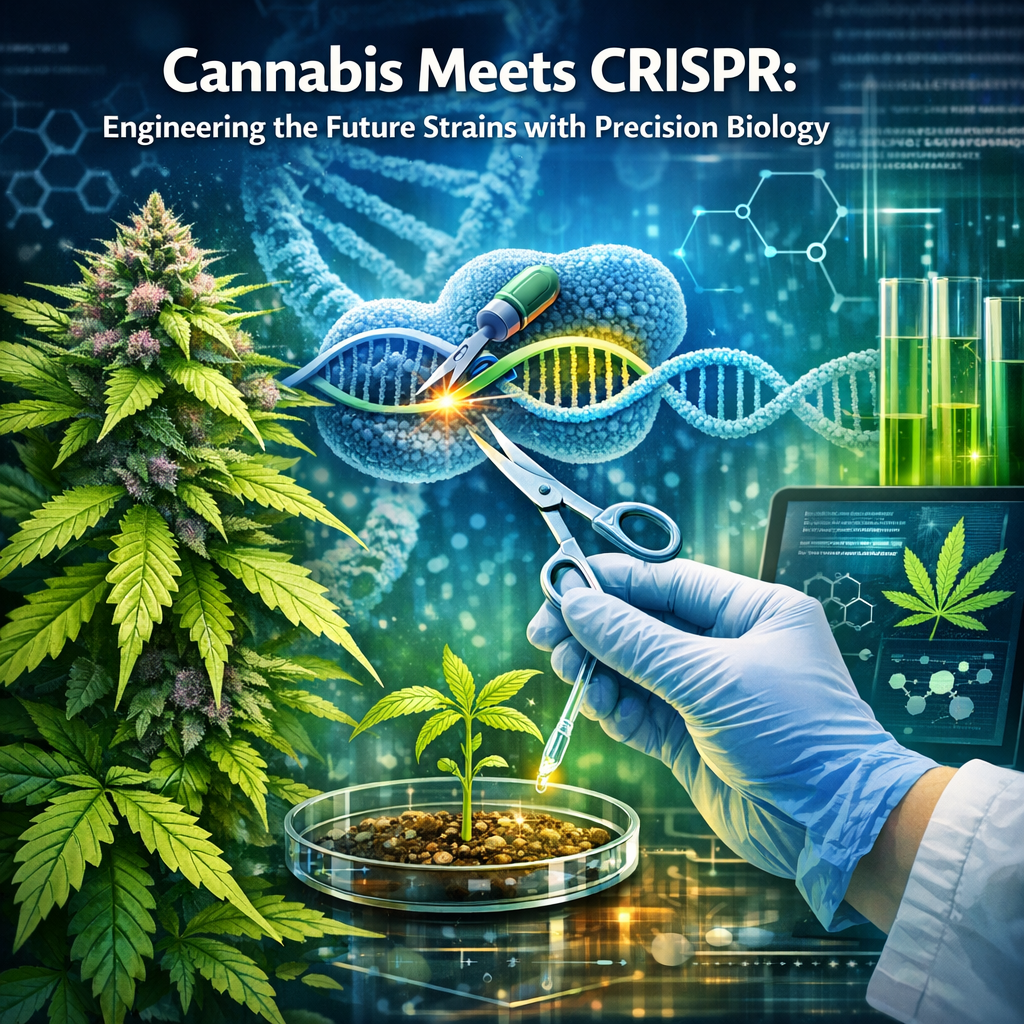
Harnessing Quantum Biology to Revolutionize Cannabis Potency and Precision
Introduction
As the frontier of technology continuously expands, the interplay between quantum biology and cannabis research is gaining traction. Quantum biology, a nascent field exploring quantum processes within biological systems, holds promising potential to transform cannabis cultivation and quality assurance. Traditional focus in cannabis cultivation has centered around genetics and environmental factors, yet innovations in quantum biology suggest a third dimension where atomic and subatomic interactions could drastically enhance cannabis potency and precision.
The core principle of quantum biology lies in quantum mechanics—an area of physics dealing with phenomena at microscopic scales. These principles, such as superposition and entanglement, illuminate surprising properties that, when applied to biological systems, unlock new potentials. For cannabis, its biochemical landscape—encompassing cannabinoids like THC and CBD, flavonoids, and terpenes—is determined by a myriad of molecular reactions. Quantum biology’s insights into these reactions could revolutionize our understanding of cannabinoid biosynthesis and the interaction of compounds within the endocannabinoid system.
The integration of the quantum framework into cannabis research not only aims at enhancing potency—defined as the strength of active compounds—but also precision, the capability to produce desired effects consistently. For instance, by leveraging quantum mechanics, researchers could modulate the plant’s internal processes to develop strains with specific cannabinoid profiles targeted to medical conditions.
Moreover, the notion of precision is vital not merely biologically but economically. Quantum-enhanced methods could streamline production, reduce waste, and standardize quality, creating tremendous implications for growers and consumers. In today’s competitive market, where regulatory scrutiny is increasing, and consumer demand for consistency is a priority, the utilization of quantum biology offers a competitive edge.
Overall, the fusion of quantum biology with cannabis research marks an era of high-tech innovation that empowers cannabis professionals with tools to transcend current constraints and explore new possibilities. This exploratory synergy also lays down the groundwork for future breakthroughs in other plant-based medicinal applications.
Features
The intriguing marriage of quantum biology and cannabis research is supported by pioneering studies that underpin its potential. One noteworthy study conducted by researchers at the University of California, Berkeley, focused on the role of quantum coherence in photosynthesis, exploring how plants transform sunlight into energy with extraordinary efficiency. This insight into energy transfer within plants informs us of potential efficiencies that could be replicated in optimizing cannabis growth processes.
Additionally, a study published in Nature Communications reveals that the olfactory receptors, responsible for detecting terpenes, might employ quantum tunneling—a process where particles pass through energy barriers. Understanding and manipulating such quantum processes can lead to precise terpene profiling, essential for breeding strains that deliver consistent sensory experiences and therapeutic effects.
Within the medical realm, the ability to tailor cannabinoid biosynthesis with quantum precision offers profound implications. A paper published by Frontiers in Plant Science emphasized quantum mechanics’ role in enzymatic reactions integral to cannabinoid synthase—the enzyme responsible for producing THC and CBD. This paves the path for producing enriched cannabinoid profiles catering to specific health issues, from chronic pain management to neurological disorders.
Furthermore, synergy between quantum biology and cannabis extends into quantum computing applications. Modeling the quantum behavior of complex molecular structures on a computer could dramatically accelerate the discovery of novel cannabinoids and their effects. Researchers at D-Wave, a leader in quantum computing, highlight how quantum simulations can shorten R&D cycles for new cannabis strains, propelling the industry closer to personalized medicine.
Equipped with these quantum insights, growers will not only craft more potent and targeted products but will also achieve eco-efficient production, resonating with global sustainability goals. This paradigm shift exemplifies how marrying ancient plant wisdom with cutting-edge quantum science can fuel the next leap in cannabis innovation.
Conclusion
Harnessing quantum biology in the cannabis sector represents a groundbreaking confluence of science and natural medicine, poised to redefine industry standards in potency and precision. By leveraging atomic-scale dynamics, cannabis professionals can elevate cultivation strategies, ensuring consistency and efficacy in a rapidly growing market. The exciting potential of quantum methodologies promises not only enriched products but also a new era in plant-based therapeutics, paving the way for further botanical discoveries.
References
1. University of California, Berkeley, study on quantum coherence in photosynthesis – [Nature Communications](https://www.nature.com/articles/s41467-020-20445-1)
2. Quantum tunneling process in olfactory receptors – [Nature Communications](https://www.nature.com/articles/ncomms6206)
3. Frontiers in Plant Science paper on quantum mechanics and cannabinoid synthase – [Frontiers in Plant Science](https://www.frontiersin.org/articles/10.3389/fpls.2020.01025/full)
4. D-Wave Systems’ insights on quantum computing in cannabis R&D – [D-Wave](https://www.dwavesys.com)
Summary: Combining quantum biology with cannabis research offers revolutionary potential to enhance cannabis potency and precision. By applying principles of quantum mechanics to biological systems in cannabis, the industry can achieve new heights in cultivation and therapeutic applications. This innovation not only promises enriched cannabinoid profiles but also ensures eco-efficient production, resonating with sustainability goals. The synergy further enables streamlined research and development through quantum computing, paving the way for personalized cannabis medicine and broadening the horizon for plant-based therapeutic discoveries.