Unraveling the Quantum Mechanics of Cannabinoid Interactions: Pioneering New Frontiers in Cannabis Science
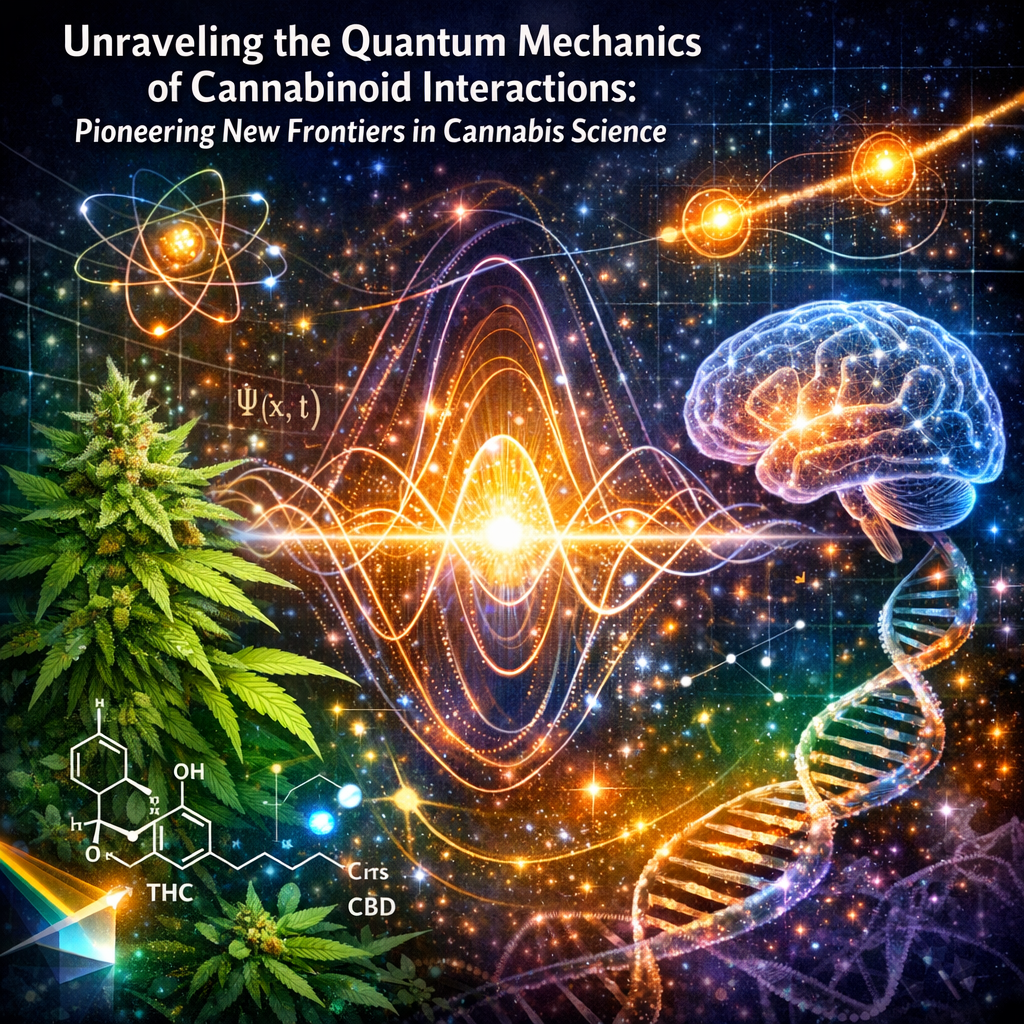
The intersection of quantum mechanics and cannabis science might seem like a juxtaposition of two vastly different fields, yet it is precisely in this convergence that some of the most groundbreaking research is taking place. At the heart of cannabis science are cannabinoids, the chemical compounds in cannabis that confer its medicinal and psychoactive properties. While the interactions between cannabinoids and the human body have long been studied, approaching these interactions from a quantum mechanics perspective offers a profound new depth of understanding.
Quantum mechanics is the branch of physics that deals with the behavior of particles on an atomic and subatomic level. It challenges our traditional understanding of physics on macroscopic scales, introducing phenomena like superposition, entanglement, and quantum tunneling—concepts that seem almost mystical to the uninitiated. Similarly, the cannabinoid system, or the endocannabinoid system (ECS), is a complex network of receptors, endocannabinoids, and enzymes in the human body that plays a crucial role in maintaining physiological balance. Scientists believe that bridging quantum mechanics with cannabis research can lead to significant breakthroughs in how we understand cannabinoid interactions and their effects.
The ECS is primarily made up of cannabinoid receptors, CB1 and CB2, which interact with cannabinoids like THC and CBD. These interactions have traditionally been explained through classical biology and chemistry. However, just as quantum mechanics has changed the paradigms in computing, cryptography, and materials science, its principles could offer novel explanations for cannabinoid-receptor binding affinity, efficacy, and biological responses.
In recent years, researchers have started applying quantum theory to better understand molecular interactions within the ECS. It turns out that quantum effects may be essential for explaining the precise manner and affinity with which cannabinoids bind to their receptors at molecular levels. This transformative perspective could potentially lead to the design of more efficient and targeted cannabis-derived therapeutics. Through quantum modeling, researchers hope to reveal hidden nuances of the ECS, which could result in significant advances in cannabis-based medicine.
Features: Exploring Quantum Mechanics in Cannabinoid Science
In a landmark study published in the journal Nature Chemistry, researchers employed advanced quantum simulations to analyze the interactions between THC molecules and the CB1 receptor. By understanding binding kinetics and electron behavior at quantum scales, the study provided insights into how slight changes at the atomic level can dramatically affect the efficacy and outcome of cannabinoid interactions.
The significance of quantum theory in cannabinoid science is further exemplified in research conducted by a team at Stanford University. Using quantum computing, they simulated cannabinoid interactions within the ECS and identified energy states of cannabinoids that were previously unobservable using conventional methods. This pioneering approach holds promise for the development of new cannabinoid or cannabinoid-like molecules with enhanced therapeutic potential.
One key takeaway from these studies is the potential to custom-tailor cannabinoids to maximize therapeutic effects while minimizing side effects—a significant challenge in cannabinoid-based therapeutics. Moreover, these quantum studies help elucidate why certain people may experience different effects or side effects from the same cannabis strain, opening up possibilities for personalized cannabis treatments.
Additionally, a collaboration between physicists and biochemists illustrated in their research how quantum entanglement could refine our understanding of molecular coherence in cannabinoid interactions. This cross-disciplinary study, published in Scientific Reports, demonstrated that examining entangled states of electrons within molecules might be harnessed to increase drug efficacy.
Such insights signal a shift toward viewing cannabinoid interactions beyond the classical lock-and-key model. The quantum perspective can potentially revolutionize cannabinoid pharmacokinetics, guiding researchers in the creation of better cannabinoid-based medicines to target pain, inflammation, anxiety, and neurodegenerative diseases.
Conclusion
Unraveling the quantum mechanics of cannabinoid interactions heralds an exhilarating frontier in cannabis science. By merging the principles of quantum mechanics with cannabinoid research, we are not only expanding our scientific understanding but paving the way for a future of personalized, effective cannabis-based therapies. As this field evolves, it offers the tantalizing potential to unlock deeper secrets of the ECS, transforming how we perceive and utilize the cannabis plant for medical applications.
Concise Summary
The exploration of quantum mechanics in cannabis science offers innovative insights into the interactions of cannabinoids within the human body. Researchers are employing advanced quantum theories and models to deepen our understanding of how cannabinoids, like THC and CBD, bind to receptors in the endocannabinoid system (ECS). This approach could revolutionize the development of cannabis-based therapies by facilitating the design of tailor-made cannabinoids that maximize therapeutic effects and minimize side effects. By bridging these fields, significant breakthroughs in personalized medicine and enhanced cannabis-derived treatments are on the horizon.