Beyond THC: Unraveling the Therapeutic Potential of Minor Cannabinoids in Advanced Product Formulation
Introduction
For decades, the *cannabis industry* has predominantly focused on tetrahydrocannabinol (THC) for its psychoactive effects and cannabidiol (CBD) for its non-intoxicating therapeutic properties. However, as scientific research expands our understanding of this versatile plant, attention turns to the less recognized but equally important constituents known as minor cannabinoids. With over 100 cannabinoids identified in the cannabis plant, THC and CBD are merely the tip of the iceberg. These minor cannabinoids, which exist in smaller concentrations, hold therapeutic potential that promises to revolutionize advanced product formulation.
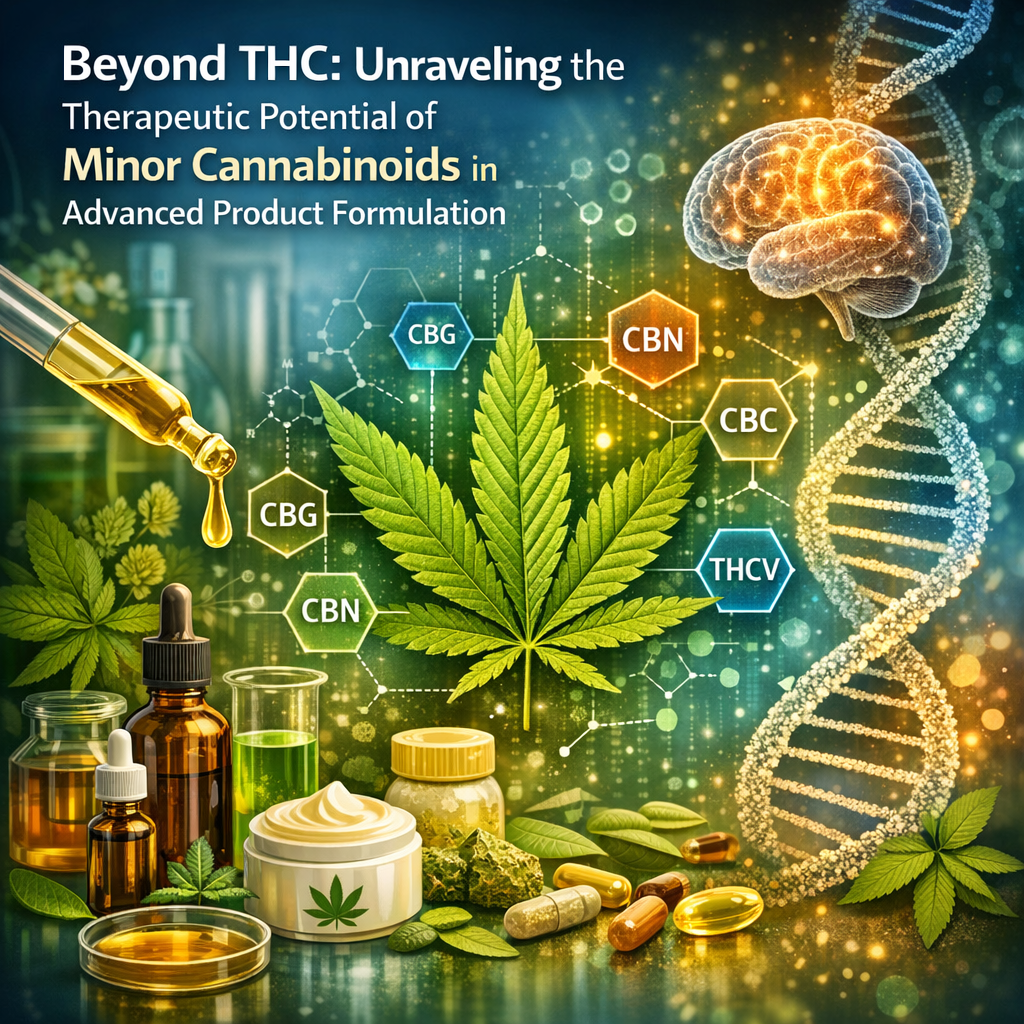
The renewed interest in minor cannabinoids such as cannabigerol (CBG), cannabichromene (CBC), tetrahydrocannabivarin (THCV), and cannabinol (CBN) is primarily fueled by their unique properties that could complement or enhance the effects of THC and CBD. Industry experts and medical researchers alike are keen on elucidating how these compounds interact with the human endocannabinoid system (ECS) to offer specific health benefits. CBG, for instance, is often referred to as the “mother of all cannabinoids” because it serves as a precursor for other cannabinoids; its potential neuroprotective properties and role in reducing intraocular pressure offer compelling avenues for treating neurological disorders and glaucoma. Similarly, CBC is showing promise in its anti-inflammatory and analgesic properties, contributing to the entourage effect—the theory that cannabinoids work synergistically to produce greater therapeutic effects than any single compound alone.
Advanced product formulation incorporating minor cannabinoids presents an exciting frontier not just for consumer wellness products but also for medical cannabis therapies. Understanding the distinct roles of these cannabinoids can lead to targeted therapies that capitalize on their individual and combined effects. As legalization expands and the regulatory environment evolves, empowering both consumers and professionals with robust, evidence-backed knowledge becomes vital. By delving into the world of minor cannabinoids, we can unlock new paths for innovative products catering to a range of health and wellness needs.
Features
Recent years have witnessed a surge in scientific research dedicated to exploring the therapeutic potentials of minor cannabinoids. Researchers are discovering distinct pathways through which these compounds can influence health outcomes. For example, CBG is being studied for its potential role in treating inflammatory bowel disease (IBD). A study published in [*Biochemical Pharmacology*](https://www.sciencedirect.com/science/article/abs/pii/S0006295214003541) found that CBG exhibited anti-inflammatory effects in experimental models of IBD, suggesting its potential as a novel treatment option.
Similarly, THCV is gaining traction for its potential benefits in metabolic health. A study published in [*Diabetes Care*](https://care.diabetesjournals.org/content/39/1/10) demonstrated that THCV might help in glycemic control and add therapeutic value for patients with type 2 diabetes. The study highlighted that THCV could improve fasting plasma glucose and enhance pancreatic cell function, pointing to its utility in addressing metabolic disorders.
CBC is another minor cannabinoid generating considerable interest. Research published in [*Experientia*](https://link.springer.com/article/10.1007/BF01992999) highlighted that CBC demonstrates significant anti-inflammatory, antimicrobial, and analgesic activities. Meanwhile, CBN is being spotlighted for its potential sedative effects which could be harnessed for sleep aid products. Studies, such as those on [PubMed](https://www.ncbi.nlm.nih.gov/pmc/articles/PMC7023045/), have suggested that CBN, particularly when combined with THC, could be an effective intervention for improving sleep quality.
The potential applications of these minor cannabinoids in product formulation are expansive and far-reaching. They not only provide tailored therapeutic solutions but also offer companies in the cannabis industry an opportunity to diversify their offerings beyond THC- and CBD-dominant products. Innovative companies are beginning to isolate these cannabinoids for targeted formulations, catering to specific consumer needs, whether it’s enhancing focus, reducing anxiety, improving sleep, or alleviating pain.
Conclusion
As our understanding of minor cannabinoids deepens, the therapeutic landscape of cannabis will continue to evolve, offering new opportunities for advanced product formulations. By harnessing the unique properties of these lesser-known cannabinoids, we can not only enhance the effects of traditional cannabis treatments but also develop novel therapies for a wide range of conditions. The future of cannabis lies beyond THC and CBD, and those who recognize and explore the potential of minor cannabinoids will lead the charge in this promising new frontier.
Concise Summary
Minor cannabinoids such as CBG, CBC, THCV, and CBN are gaining attention for their potential therapeutic properties. These lesser-known compounds present opportunities for new product formulations beyond traditional THC and CBD dominance. Research highlights CBG’s neuroprotective and anti-inflammatory potential, THCV’s benefits for glycemic control in diabetes, CBC’s analgesic properties, and CBN’s potential as a sleep aid. As cannabis legalization and understanding expand, focusing on these cannabinoids holds promise for developing innovative therapies and personalized wellness products, marking a new era in cannabis treatments.