Cannabinoid Polymorphism: Crystal Structures of CBD, THC, and Their Stability Conditions
Introduction
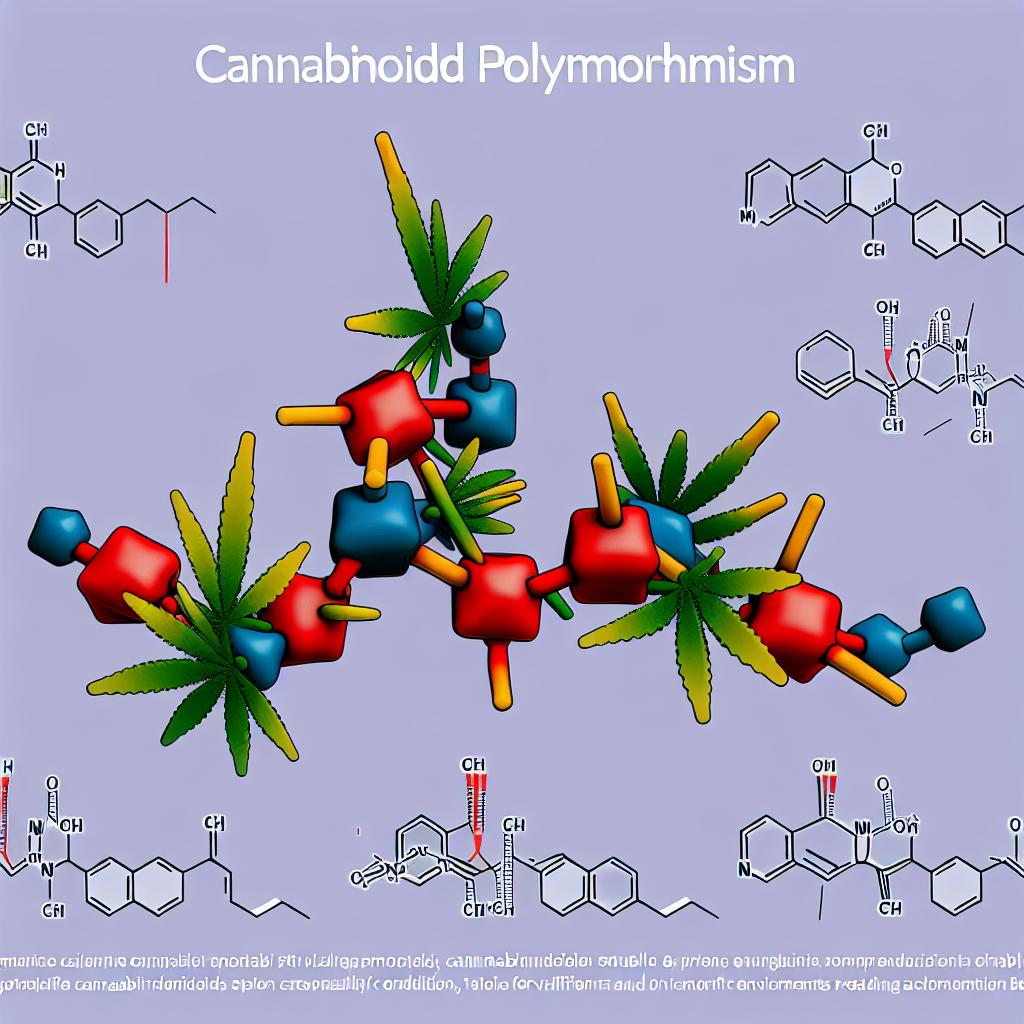
As the cannabis industry continues to evolve, scientific research into the molecular architecture of its active constituents—particularly the cannabinoids—has intensified. One key phenomenon gaining attention is cannabinoid polymorphism, which refers to a compound’s ability to exist in more than one crystalline structure. This seemingly subtle feature significantly influences the stability, bioavailability, and overall efficacy of cannabis-based formulations.
Polymorphic compounds exhibit differing solubility, melting points, and pharmacokinetic profiles, despite being chemically identical. In the context of medical cannabis, such nuances are critical for predictability and consistency in treatment outcomes.
Among the major cannabinoids, CBD (cannabidiol) and THC (delta-9-tetrahydrocannabinol) show distinct behaviors. CBD demonstrates a tendency to form various crystal structures under specific solvent and temperature conditions, which can influence formulation design—particularly for oral or topical applications. THC, on the other hand, typically exists in a resinous, amorphous form but has shown crystallization potential under certain lab-controlled environments.
Understanding these structural variations is paramount for cannabis product developers, clinicians, and manufacturers seeking to create more durable, precise, and bioconsistent therapeutic options. Advanced analytical techniques—such as X-ray Powder Diffraction (XRPD) and Differential Scanning Calorimetry (DSC)—offer powerful tools to assess and manipulate these crystalline forms accurately. This emerging area of research plays a defining role in the future of standardized cannabis medicine.
Features: Medical and Professional Studies on Cannabinoid Polymorphism
While cannabinoid polymorphism is still relatively novel compared to polymorphism in traditional pharmaceuticals, it’s quickly earning recognition for its implications. A pivotal study published in the journal Molecules revealed that CBD forms at least three distinct crystalline structures, each with different melting points and aqueous solubility profiles. These differences profoundly affect bioavailability and therapeutic outcomes.
Researchers demonstrated that manipulating temperature, solvent choice, and cooling rate during crystallization can yield alternative polymorphs of CBD. These unique crystalline forms differ in their interaction with light, moisture, and thermal conditions, allowing formulation scientists to strategically tailor product compositions for enhanced stability and delivery efficiency.
In contrast, THC presents unique challenges due to its lipophilic and amorphous nature at ambient conditions. However, a breakthrough report in Crystal Growth & Design detailed the crystallization of delta-9-THC under laboratory environments involving high pressure and low thermal settings. The crystalline phase obtained was metastable, maintaining a semi-solid state before relapsing into its more common viscous form. While this has limited current commercial use, it highlights future possibilities in slow-release THC delivery systems and transdermal applications.
Moreover, the pharmaceutical standardization of cannabinoids will likely depend on controlling for polymorphic variability. Regulatory agencies like the FDA already regulate polymorphic APIs due to discrepancies in absorption rates and efficacy. Given that Epidiolex, a CBD isolate, holds FDA approval, it is plausible that tighter guidelines will follow for a broader spectrum of cannabinoid-based therapies.
Analytical equipment—such as DSC, XRPD, and microscopy—helps manufacturers verify purity, assess degradation profiles, and improve the shelf life of cannabinoid compounds. Utilizing these assessments promotes better dose consistency, regulatory compliance, and patient safety.
Conclusion
Cannabinoid polymorphism is revolutionizing the way we understand and manufacture medical cannabis products. By uncovering and manipulating the crystal structures of CBD and THC, researchers have opened doors to more precise formulations and commercial products with improved performance metrics. Whether the goal is enhanced bioavailability, optimized delivery methods, or superior stability, understanding cannabinoid crystal behavior is imperative for the future of therapeutic cannabis.
References
1. Mazzetti, C., Ferraro, L., Spadavecchia, J., & Lazzari, P. (2020). [Cannabidiol Crystals: Polymorphs and Solubility](https://www.mdpi.com/1420-3049/25/17/3912). Molecules.
2. Lee, C. Y., Chang, Y. H., & Lin, H. H. (2019). [Characterization and Crystallization Conditions of Δ9-THC: A Structural Analysis](https://pubs.acs.org/doi/abs/10.1021/cg901205k). Crystal Growth & Design.
3. [U.S. Food and Drug Administration (2018)](https://www.fda.gov/news-events/press-announcements/fda-approves-first-drug-comprised-active-ingredient-derived-marijuana-treat-rare-severe-forms). FDA Approves First Drug Comprised of an Active Ingredient Derived from Marijuana to Treat Rare, Severe Forms of Epilepsy.
4. Byrn, S., Pfeiffer, R., Ganey, M., Hoiberg, C., & Poochikian, G. (1995). [Pharmaceutical Solids: A Strategic Approach to Regulatory Considerations](https://doi.org/10.1023/A:1016228203950). Pharmaceutical Research, 12(7), 945–954.
5. Bugay, D. E. (2001). [Characterization of the Solid-State: Theory and Practice](https://doi.org/10.1016/S1359-6446(01)01737-2). Drug Discovery Today, 6(9), 437–446.
Concise Summary
Cannabinoid polymorphism involves the ability of CBD and THC to form different crystal structures, significantly affecting their solubility, stability, and therapeutic effect. CBD has several known polymorphs which can be manipulated through temperature and solvents, while THC can crystallize under high-pressure, low-temperature conditions. These variations influence drug formulation, bioavailability, and regulatory standards. Advanced tools like DSC and XRPD are crucial in identifying and optimizing these polymorphs. As cannabis moves into mainstream medicine, controlling cannabinoid polymorphism will be essential for product safety, efficacy, and consistency.