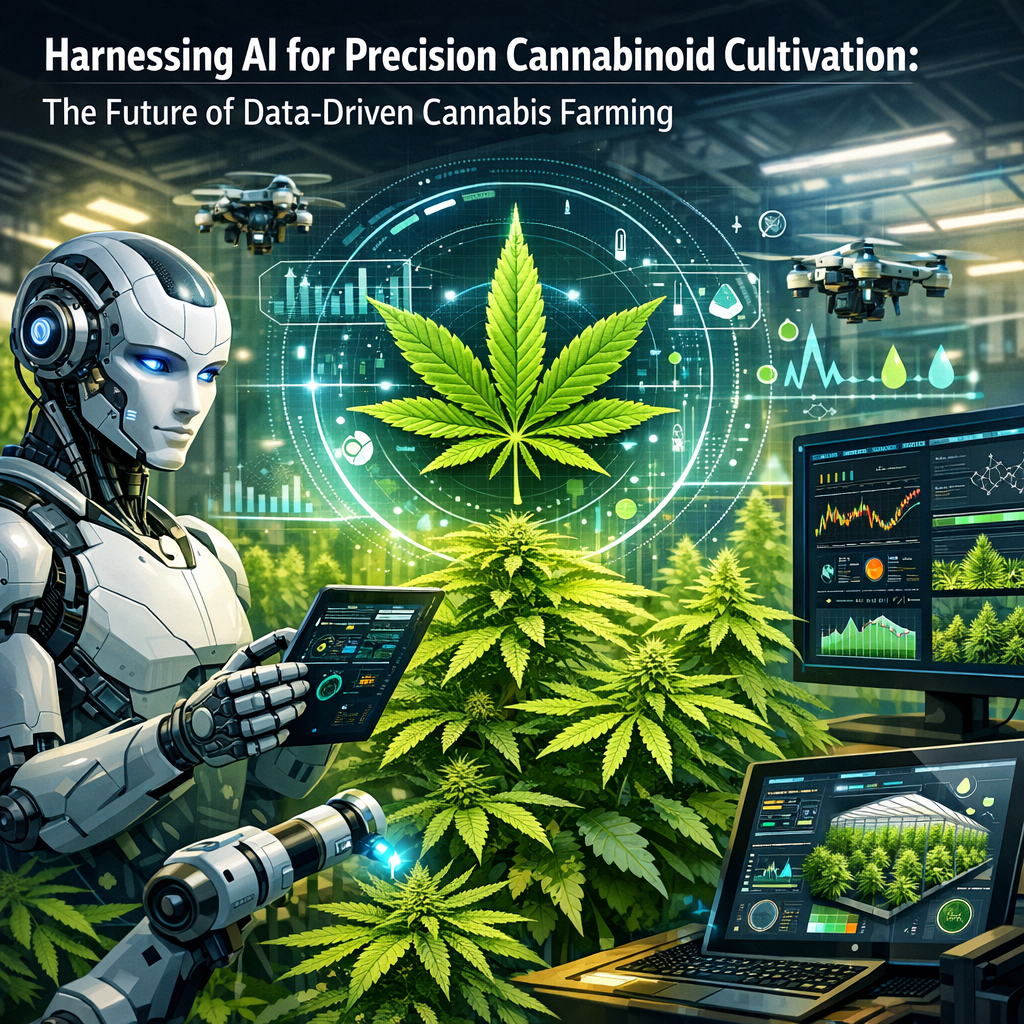
Harnessing AI for Precision Cannabinoid Cultivation: The Future of Data-Driven Cannabis Farming
The evolving landscape of cannabis cultivation has undergone significant transformations, primarily driven by technology’s integration into agricultural practices. Among these technological advancements, Artificial Intelligence (AI) emerges as a trailblazer, revolutionizing precision cannabinoid cultivation. Once regarded as a mere concept of the future, AI-powered tools now actively shape the modern cannabis cultivation industry. This digital intervention enables unprecedented accuracy, efficiency, and sustainability in farming practices. For both consumers and marijuana professionals, understanding AI’s role presents promising opportunities to enhance yield quality and overall operational efficiency.
Traditionally, cannabis cultivation both nationally and globally depended heavily on growers’ experience to manage plant life cycles, optimize yields, and enhance cannabinoid profiles. This intuitive approach, while fruitful, is prone to human error and inconsistency. Enter AI—a solution offering significant promise in refining these processes through data-driven insights and automation. By leveraging AI technologies, cannabis farmers can apply precise methodologies to optimize various elemental conditions such as light, nutrition, water, and temperature. This pursuit of perfection leads to consistent high-quality yields, ultimately benefitting both businesses and end-users.
AI’s data-driven analysis surpasses human capacity, analyzing vast quantities of data with remarkable speed and accuracy. Machine learning algorithms can predict optimal harvest times, detect plant diseases early, and even adjust environmental controls in real-time. Furthermore, these systems can analyze the unique phylogenetic makeup of each species, tailoring growth environments to enhance specific cannabinoid compounds. AI excels not only in cognitive capacity but also in its ability to evolve, learning from each crop cycle to continuously improve results.
In addition to optimizing plant growth, AI contributes to sustainability—a growing concern in agriculture. By minimizing resource wastage and maximizing plant productivity, AI-integrated systems reduce the environmental footprint associated with cannabis farming. This sustainability is not only a necessity for our planet but also a growing demand from conscientious consumers. Essentially, AI empowers farmers to achieve more with less, supporting the industry’s movement toward sustainable, responsible farming practices.
Features Section
Several studies and projects illustrate the potential of AI in agricultural practices, particularly within the realm of cannabis cultivation. Notably, researchers at Advanced Intelligent Systems have developed prototypes of robotic systems integrated with AI to automate cannabis farming processes. These systems are capable of performing nuanced tasks such as pruning, monitoring plant health, and even pollination—functions traditionally overseen by human growers. As these technologies advance, they promise to alleviate labor-intensive processes in cannabis farms, leading to increased productivity and decreased labor costs.
A 2021 study conducted by the Precision Agriculture Association underscored AI’s ability to optimize water usage through smart irrigation systems—a feature of paramount importance in cannabis cultivation. This study highlighted a 30% reduction in water consumption in test crops without sacrificing yield. The environmental and economic benefits of such water conservation measures are significant, making AI integration an attractive investment for cannabis businesses committed to sustainable practices.
Moreover, AI’s impact on pest management is garnering attention. According to research published in the Journal of Agricultural Science and Technology, AI-driven systems successfully detected and identified pests with over 90% accuracy, facilitating early intervention. This early detection capability is critical in preventing infestations that can decimate crops and erode profits. By integrating machine learning models with sensors and imaging technologies, these smart systems offer a robust preventive strategy against potential biological threats.
An area of particular interest is the use of AI to analyze and enhance specific cannabinoids, aiming to cultivate strains with targeted therapeutic properties. The Cannabis Genomic Research Initiative at UC Berkeley has been exploring AI’s potential in this space, using machine learning algorithms to draw connections between genetic profiles and cannabinoid expressions. Their work opens possibilities for creating custom strains with tailored cannabinoid ratios, designed to meet the specific therapeutic needs of consumers—an advancement marking a significant leap forward in personalized medicine.
Conclusion
The integration of AI in precision cannabinoid cultivation represents not just an evolution, but a revolution in how cannabis is cultivated and understood. By enhancing efficiency, boosting yields, and fostering sustainable practices, AI transforms the challenges of traditional farming into opportunities. As this technology continues to develop, it holds immense potential to redefine industry standards, driving forward both quality and innovation. Whether you are a consumer seeking purer products or a professional aiming for efficiency, the data-driven future of cannabis farming powered by AI offers benefits worth embracing.
References
1. [Advanced Intelligent Systems – AI in Agriculture](https://www.advancedintelligentsystems.com)
2. [Precision Agriculture Association – Smart Irrigation Systems Study](https://www.precisionagricultureassociation.org)
3. [Journal of Agricultural Science and Technology – AI and Pest Management](https://www.agriculturalsciencetechnologyjournal.org)
4. [UC Berkeley Cannabis Genomic Research Initiative – AI and Cannabinoid Research](https://www.berkeleycannabisgenomics.com)
Concise Summary
The integration of AI in cannabis farming is revolutionizing traditional practices by providing precision cultivation and sustainability. AI tools enable data-driven insights that improve yield quality and operational efficiency while minimizing resource wastage. Using AI, growers can optimize light, water, and nutrient levels and anticipate harvest times, enhancing both productivity and sustainability. Advances such as robotic systems, smart irrigation, and targeted strain development exemplify AI’s potential to redefine cannabis farming, making it appealing for consumers seeking quality and businesses aiming for sustainability and economic efficiency.