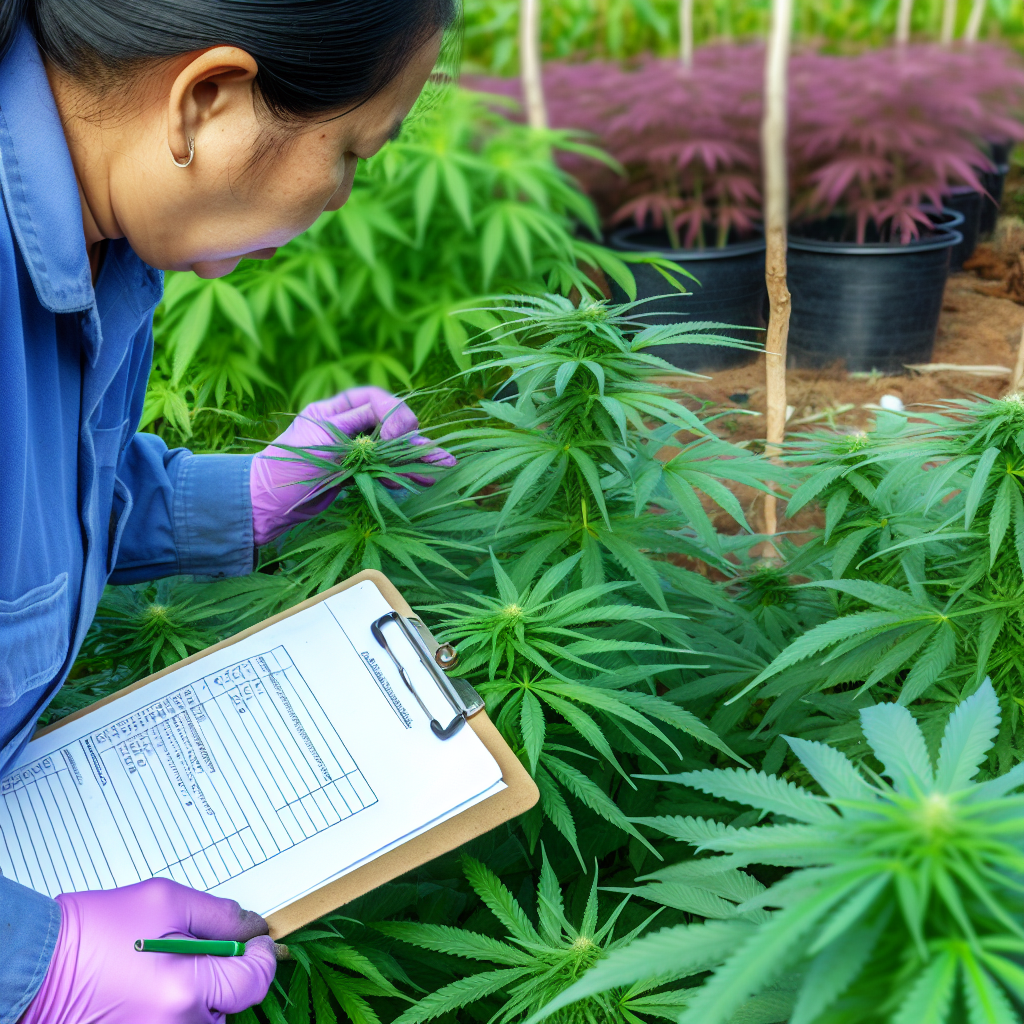
Quantum Dots and Cannabis: Revolutionizing Photobiology and Yield Optimization
In the rapidly evolving world of cannabis cultivation, innovative technologies are continuously being explored to enhance plant growth, increase yields, and optimize quality. One such groundbreaking technology capturing the attention of cannabis growers and researchers alike is the use of quantum dots. These tiny semiconductor particles, measuring just a few nanometers, possess unique optical and electronic properties, especially in their ability to emit light at specific wavelengths. This attribute makes them highly valuable in photobiology, especially for applications where precise light control is essential.
Photobiology in Cannabis Cultivation
Photobiology, the study of the interactions between organisms and light, has become a pivotal aspect of cannabis cultivation, especially with indoor growing operations where artificial lighting is the primary energy source. Traditional lighting sources such as LED and HPS grow lights offer broad-spectrum lighting, which supports plant growth but lacks the finesse needed to optimize photosynthesis fully. Quantum dots, on the other hand, can be engineered to emit precise wavelengths of light to target specific photoreceptors within the cannabis plant. This precision enables growers to fine-tune their lighting systems to enhance cannabinoid production, influence growth patterns, and even modify terpene profiles.
The integration of quantum dots into cannabis cultivation is still emerging, but it promises a future where growers can exploit the full potential of photobiological processes. By harnessing the power of these tiny particles, cannabis producers can customize the light environment to simulate perfect growing conditions, potentially transforming yield and quality outcomes. This technology not only improves photosynthesis efficiency but also aligns with sustainable cultivation practices by optimizing energy consumption.
With the global demand for cannabis products increasing, the potential impact of quantum dots on industry practices cannot be underestimated. By enabling an enhanced understanding of how different wavelengths of light influence cannabis growth and development, quantum dots offer a winning combination of science and innovation for marijuana professionals and consumers seeking the highest quality plants.
Recent Studies and Applications
Recent studies investigate the potential of quantum dots in agriculture, with promising findings applicable to cannabis cultivation. A pivotal study published in the journal [*Nature Nanotechnology*](https://www.nature.com/articles/nnano.2019.82) explored how quantum dots could be utilized to enhance photosynthetic efficiency in plants. Researchers found that by adjusting the emission spectrum of quantum dots, specific wavelengths could be directed toward chlorophyll absorption peaks, thereby increasing photosynthetic activity. This discovery opens new avenues for improving the energy conversion processes in cannabis, where light quality significantly impacts plant growth and secondary metabolite production.
Additionally, a [2020 study in *Advanced Materials*](https://onlinelibrary.wiley.com/doi/full/10.1002/adma.202001234) highlighted the potential of quantum dots to enhance plant stress tolerance. The authors demonstrated how coatings of quantum dots on plant leaves could modify the light environment, reducing the adverse effects of environmental stressors. For cannabis cultivation, this could translate into more resilient plants that maintain productivity under suboptimal growing conditions.
In the realm of controlled environment agriculture, quantum dots are being recognized for their capacity to optimize energy use. Studies show that these particles can improve light conversion efficiency, resulting in reduced energy consumption for growers ([source](https://www.frontiersin.org/articles/10.3389/fpls.2020.612786/full)). This efficiency aligns with sustainable practices, lessening the ecological footprint of cannabis cultivation.
Implementing quantum dots in cannabis cultivation is not without its challenges. The technology requires precise application and continuous adaptation to suit different cannabis strains and growing practices. Furthermore, ongoing research is needed to fully understand the long-term implications of using such nanotechnology in agricultural settings. Despite these hurdles, the potential revolutionary impact of quantum dots on optimizing yields, improving plant quality, and facilitating sustainable cultivation practices make them a compelling area of exploration for both professionals and enthusiasts.
Conclusion
The integration of quantum dots into cannabis cultivation is set to redefine precision agriculture. By leveraging their ability to enhance photosynthesis and improve stress resilience, cannabis growers can anticipate improved yield and quality outcomes. While there are challenges to be addressed, the fusion of quantum dot technology with cannabis growing practices holds the promise of a sustainable, energy-efficient future for the industry. As research progresses, its full potential will undoubtedly unfold, offering unprecedented opportunities for innovation in the cannabis sector.
Concise Summary:
The integration of quantum dots in cannabis cultivation offers significant advancements in photosynthesis and stress resilience, enhancing both yield and quality. Quantum dots allow for precise wavelength control, optimizing light conditions for cannabinoid and terpene development. Despite challenges in adapting this technology to various strains, the benefits of improved energy use and alignment with sustainable practices make it a promising avenue. Continued research and adaptation can transform industry practices, providing unprecedented opportunities for cannabis innovation and meeting the growing global demand.