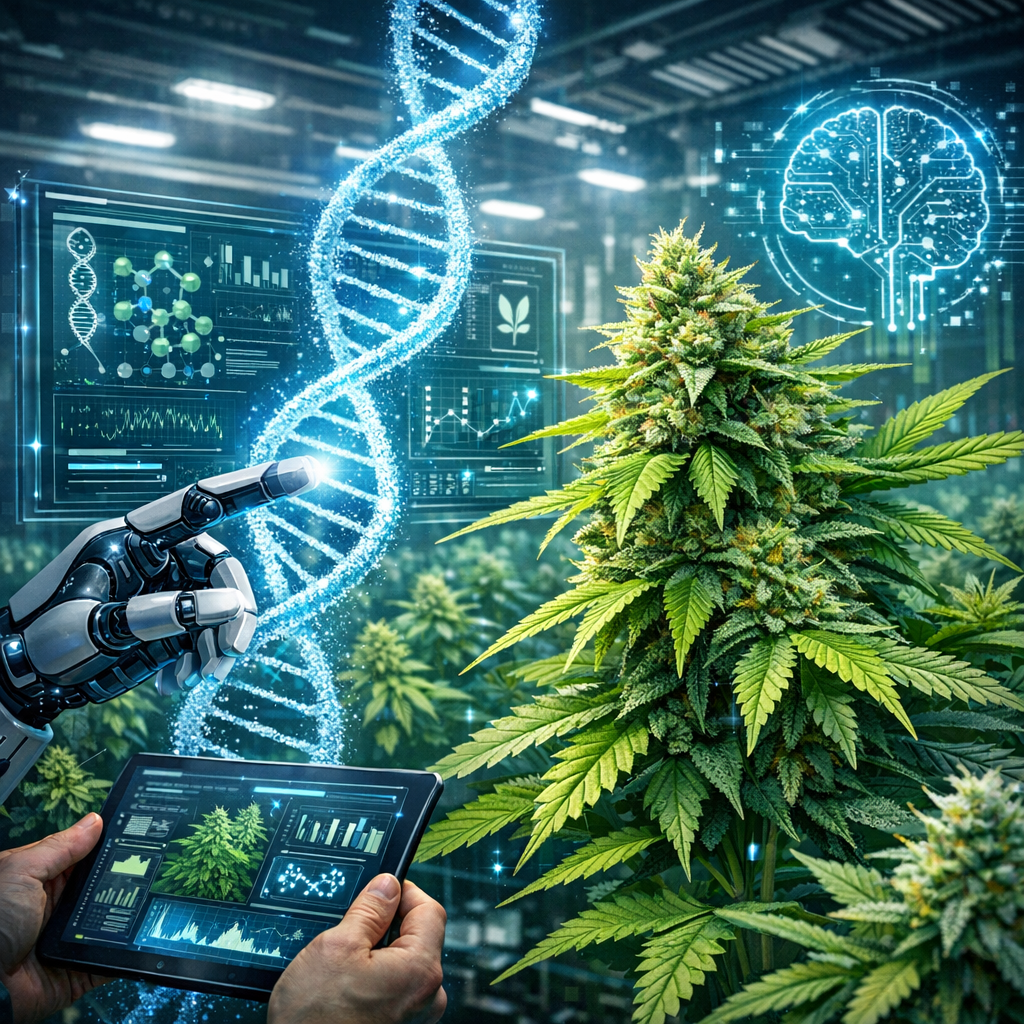
Harnessing Artificial Intelligence for Precision Breeding: The Next Frontier in Cannabis Cultivation
Introduction
The world of cannabis cultivation is experiencing a remarkable transformation, driven by technological advancements that promise to revolutionize traditional breeding practices. At the heart of this evolution is artificial intelligence (AI), a potent tool that is redefining how growers approach precision breeding. This involves using scientific techniques to develop new cannabis strains with desirable traits such as higher yields, specific cannabinoid profiles, pest resistance, and environmental adaptability. In an industry where consumer preferences and regulatory requirements continuously shift, precision breeding is no longer just a novel concept but a critical necessity.
AI brings a new level of sophistication to the breeding process, enabling a data-driven approach that allows for the precise selection of cannabis phenotypes. Traditionally, breeding has been a labor-intensive and time-consuming process, often relying on the instinct and experience of the cultivator. However, AI algorithms can analyze vast datasets to identify genetic markers linked to specific plant traits. This significantly accelerates the breeding cycle and enhances the accuracy of predicting plant qualities, thereby reducing the guesswork and variability associated with conventional methods. Moreover, AI’s ability to process and interpret complex biological data means that breeders can explore previously uncharted territories. Phenotypic predictions, environmental simulations, and gene expression analyses can all be conducted with unprecedented accuracy. The result is a highly optimized breeding strategy that can respond agilely to evolving market demands and regulatory constraints. As legalization expands and the cannabis industry becomes increasingly competitive, the integration of AI in precision breeding is poised to become a key differentiator for forward-thinking cultivators looking to stay ahead of the curve.
Features
The application of AI in cannabis breeding is supported by emerging research and professional studies, which highlight its potential to transform critical aspects of cultivation. For instance, a study published in the journal [*Nature Genetics*](https://www.nature.com/naturegenetics) demonstrated how machine learning techniques could be applied to identify genomic regions associated with desired traits in cannabis plants. By training algorithms on extensive genetic datasets, researchers could predict characteristics such as THC and CBD content with remarkable accuracy.
Furthermore, AI’s role in phenotyping is enhanced by its ability to process large volumes of image and environmental data. The use of computer vision technology allows for continuous monitoring of plant growth, health, and development. Techniques like spectral imaging and deep learning models facilitate the precise assessment of plant characteristics without intrusive intervention, which is particularly valuable in maintaining plant integrity during breeding experiments. In this context, AI serves not only as a diagnostic tool but also as a predictive model that informs better decision-making (source: [Frontiers in Plant Science](https://www.frontiersin.org/journals/plant-science)).
AI’s potential in accelerating the breeding cycle is complemented by its predictive capabilities, which play a fundamental role in risk management. By simulating different growth scenarios and environmental impacts, AI can help breeders anticipate and mitigate potential risks, such as pest infestations or adverse climate conditions. A report in the [*Plant Journal*](https://academic.oup.com/plantjournal) emphasized AI’s capacity to optimize resource allocation by forecasting needs such as water, nutrients, and light, thereby promoting sustainable cultivation practices. The integration of AI in cannabis breeding is not just about enhanced productivity; it’s about creating a sustainable future for the industry. As environmental concerns rise and markets become more regulated, the ability to breed cannabis strains that are environmentally resilient and compliant with legal standards becomes invaluable.
Conclusion
In conclusion, the application of artificial intelligence in cannabis precision breeding holds the promise of transformative change in the industry. By leveraging AI’s analytical power, breeders can fast-track the development of innovative strains while minimizing risk and maximizing resource efficiency. The convergence of AI and traditional horticultural wisdom opens new pathways for a more sustainable, precise, and responsive cannabis cultivation landscape. As research progresses and AI technologies evolve, their role in precision breeding will undoubtedly reinforce the industry’s growth, adaptability, and innovation.
References
1. Nature Genetics. “Predictive models for cannabis traits using genomic data.” [Nature Genetics](https://www.nature.com/naturegenetics)
2. Frontiers in Plant Science. “The role of AI in plant phenotyping.” [Frontiers in Plant Science](https://www.frontiersin.org/journals/plant-science)
3. The Plant Journal. “AI-driven approaches to risk management in cultivation.” [The Plant Journal](https://academic.oup.com/plantjournal)
Concise Summary:
The integration of artificial intelligence (AI) into cannabis cultivation is revolutionizing traditional breeding practices. By employing a data-driven approach, AI accelerates the breeding cycle, identifying genetic markers and predicting plant qualities with remarkable accuracy. Techniques like machine learning are being used to predict THC and CBD content, while computer vision is improving continuous monitoring of plant growth. Additionally, AI aids in risk management and optimizing resource allocation, ensuring sustainable cannabis cultivation. As the cannabis industry grows, AI’s role in precision breeding becomes indispensable, fostering innovation and efficiency in meeting dynamic market demands.