Harnessing the Power of Quantum Dots in Cannabis Cultivation: A Breakthrough in Light Manipulation for Enhanced Growth
Introduction
As the cannabis industry continues to expand and evolve, so does the technology aiming to optimize its cultivation. One of the latest innovations garnering attention is the application of quantum dots in cannabis cultivation. Originally used in fields like electronics and medical imaging, quantum dots are nanoscale semiconductor particles with unique optical and electronic properties. When applied to agriculture, these particles have the potential to dramatically enhance plant growth by optimizing light absorption.
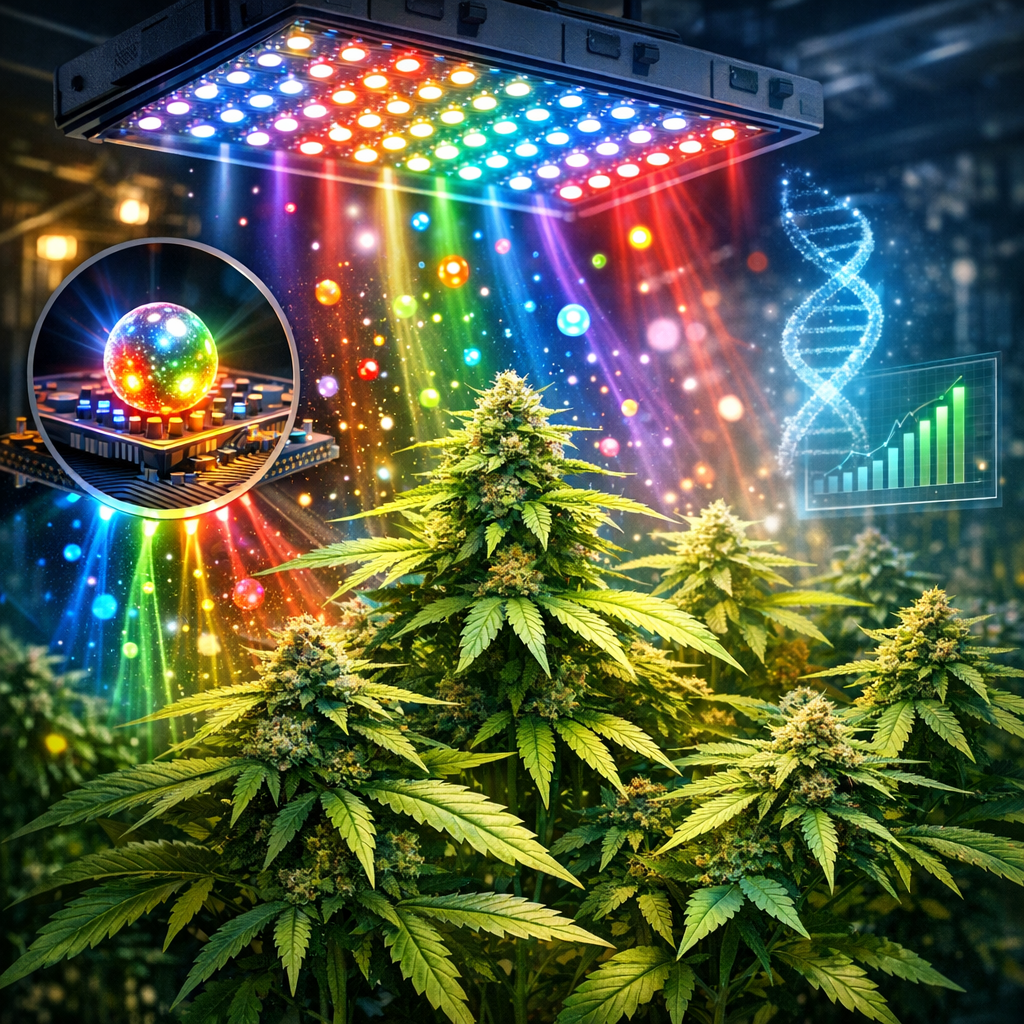
Understanding the significance of light manipulation is crucial in cannabis cultivation; it directly impacts photosynthesis, plant growth, and ultimately, yield. Quantum dots can be engineered to absorb light at specific wavelengths and re-emit it at the wavelengths most beneficial for photosynthesis. This method allows for targeted light management that could improve biomass production, cannabinoid content, and overall plant health.
In traditional cannabis cultivation, growers strive to mimic natural sunlight using high-pressure sodium (HPS) lamps and other artificial lighting systems. However, these systems can be energy-intensive and may not deliver the spectrum of light that plants most efficiently use. Quantum dots, by contrast, offer precise control over the light spectrum and can be integrated into existing lighting systems to enhance their efficiency. This technology is promising for reducing energy consumption and producing higher-quality cannabis.
Exploring the integration of quantum dots in cannabis cultivation combines nanotechnology with agricultural practices, catering to both consumer demands and environmental sustainability. Growers and researchers are exploring how these nanoparticles can improve the growing conditions of cannabis, potentially revolutionizing the industry.
Features
A primary feature of utilizing quantum dots in cannabis cultivation is their ability to enhance photosynthesis by converting light into spectrums more efficient for plant growth. Typically, plants are inefficient at using green light; however, quantum dots can convert unused light into red or blue wavelengths, crucial for photosynthesis. This conversion optimizes plant energy intake, potentially leading to faster growth rates and increased yields.
Research into the agricultural applications of quantum dots is still in its early stages, but initial studies offer promising insights. For example, a study published in *Scientific Reports* demonstrated the use of cadmium sulfide (CdS) quantum dots to improve the photosynthetic efficiency of spinach plants, resulting in enhanced growth and biomass yield. Although direct studies on cannabis are limited, the principles and outcomes in other crops provide a solid foundation for future cannabis-specific research.
Furthermore, the size and material composition of quantum dots can be manipulated to adjust their emission spectra, providing customizable lighting solutions for different stages of plant growth. This flexibility enables cultivators to fine-tune lighting conditions to the precise needs of cannabis during its vegetative and flowering stages.
From a professional standpoint, integrating quantum dots into cannabis production aligns with sustainable practices by reducing the energy consumption of traditional lighting systems. Quantum dots require less energy to operate and can be tuned to reduce light pollution, an often-overlooked aspect of urban cultivation environments. This efficiency supports eco-friendly growing practices and potentially reduces operational costs.
In the context of medical cannabis, enhanced cannabinoid levels from optimized growing conditions could lead to more consistent and potent therapeutic products. Moreover, implementing quantum dots in cultivation could support developing strains with specific medicinal properties, tailored to meet the health needs of patients.
Conclusion
The integration of quantum dots in cannabis cultivation represents a promising frontier in agricultural innovation. By enhancing light efficiency through precise spectral manipulation, growers can achieve better plant health and higher yields while reducing energy consumption. As research continues to explore the potential applications of this technology, quantum dots could redefine the standards of cannabis cultivation, benefiting professionals and consumers alike.
References
[1. Li et al., “Enhancing photosynthesis and growth of spinach plants with light-converting CdS quantum dots,” Scientific Reports, 2017.](https://www.nature.com/articles/s41598-017-15299-7)
Concise Summary
The use of quantum dots in cannabis cultivation offers a revolutionary approach by optimizing light absorption and enhancing photosynthesis. These nanoscale particles can be engineered to emit specific light wavelengths ideal for photosynthesis, improving growth and yield. Unlike traditional artificial lighting, quantum dots provide precise control over light spectrums, reducing energy consumption and enhancing plant quality. This technology holds promise for sustainable practices and superior medicinal cannabis products. While research is in early stages, insights from other plants suggest significant potential for cannabis, potentially transforming cultivation standards and satisfying consumer demands.