Sure, here’s the revised document based on your instructions:
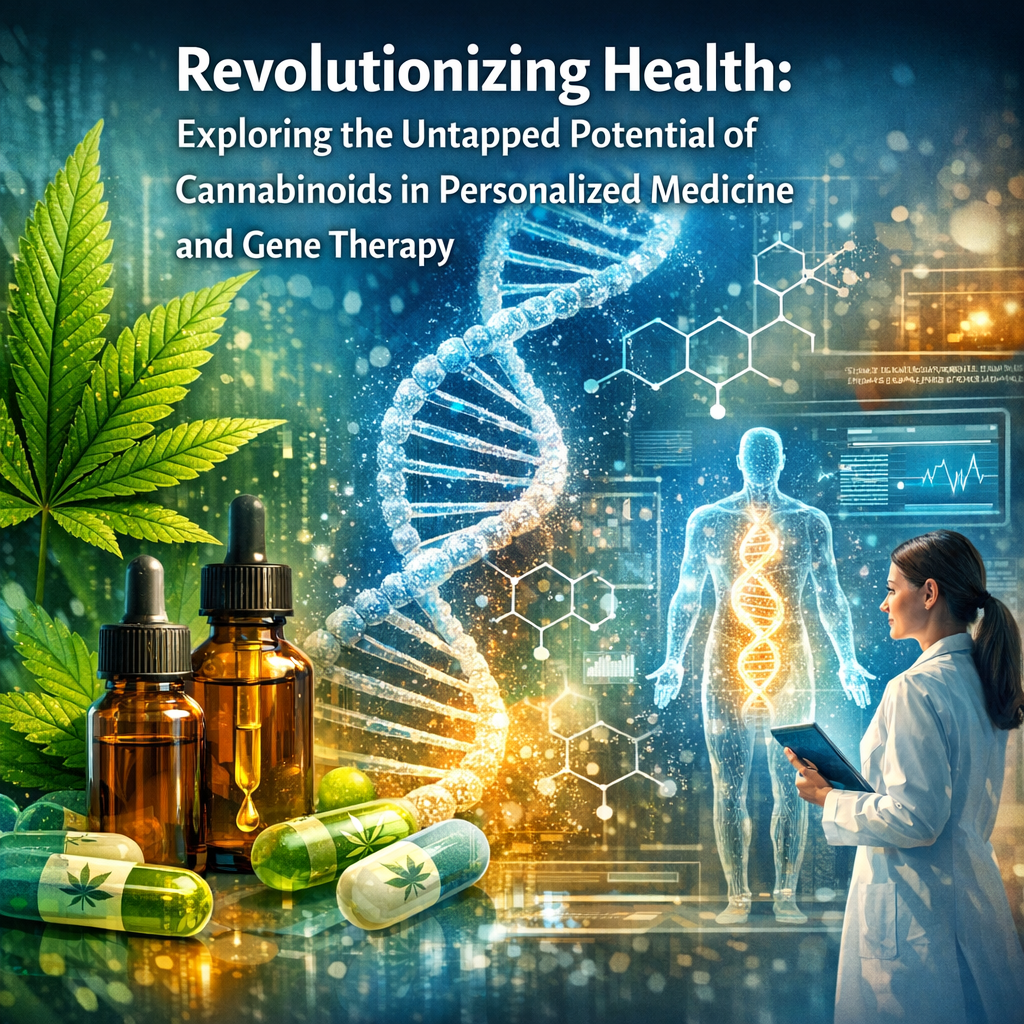
Revolutionizing Health: Exploring the Untapped Potential of Cannabinoids in Personalized Medicine and Gene Therapy
Introduction
The world of medicine is on the cusp of a revolution with the advent of personalized medicine and gene therapy. These cutting-edge approaches promise to transform healthcare by tailoring medical treatments to the individual characteristics of each patient. Personalized medicine considers the nuances of each person’s unique genetic makeup, environment, and lifestyle, allowing for more effective and targeted therapies. Simultaneously, gene therapy aims to treat or prevent disease by modifying or manipulating the expression of genes, offering hope for conditions previously deemed untreatable.
Emerging at the intersection of these next-generation medical advancements is an unexpected yet promising player: cannabinoids. Cannabinoids, the bioactive compounds found in cannabis plants, have been utilized for centuries for their therapeutic properties, ranging from pain relief to seizure control. However, the full spectrum and potential of cannabinoids in medicine remain largely untapped, especially in the realms of personalized medicine and gene therapy. Recent research suggests that cannabinoids may play a significant role in both fields, offering novel mechanisms of action that could complement or even enhance current medical practices.
Cannabinoids interact with the human body’s endocannabinoid system, a complex cell-signaling system that plays a pivotal role in regulating a variety of physiological processes such as mood, pain sensation, and immune responses. By tapping into this system, cannabinoids can exert broad and variable effects, providing a foundational basis for their use in personalized medicine to manage conditions like chronic pain, inflammation, and neurological disorders. Furthermore, cannabinoids have shown promise in influencing gene expression and modulation, hinting at their potential application in gene therapy.
As research in this area continues to expand, the opportunities for cannabinoids in healthcare become increasingly apparent. This article delves into the ongoing studies and observed outcomes associated with cannabinoids in the context of personalized medicine and gene therapy, examining their potential to revolutionize treatments and improve patient outcomes.
Features
Recent studies have begun to shed light on the role cannabinoids can play in revolutionizing personalized medicine and gene therapy. In a study published in the *Journal of Pain Research* (2020), researchers explored the application of cannabinoids in the personalized treatment of chronic pain. The study concluded that cannabinoids, particularly cannabidiol (CBD) and tetrahydrocannabinol (THC), could be used to customize pain management strategies, considering individual patient responses and genetic markers. [Read more](https://www.dovepress.com/the-role-of-cannabinoids-in-the-treatment-of-chronic-non-cancer-pain-peer-reviewed-fulltext-article-JPR).
Moreover, the potential for cannabinoids in gene therapy has been highlighted by studies focusing on the modulation of gene expression. Research published in *Cannabis and Cannabinoid Research* (2021) found that cannabinoids could influence the expression of genes associated with inflammation and apoptosis. This opens the door for their use in treating genetic conditions where these processes are dysregulated. The study provides evidence that cannabinoids might be harnessed to enhance or moderate gene therapy outcomes. [Explore further](https://www.liebertpub.com/doi/10.1089/can.2020.0102).
The promise of cannabinoids extends to the realm of oncology. A groundbreaking study published in *Frontiers in Oncology* (2018) reviewed the potential of cannabinoids in targeting cancer cells. The findings illustrated how cannabinoids could amplify the body’s response to cancer cells by affecting gene expression related to tumor growth and metastasis. This research indicates a synergistic potential when cannabinoids are used alongside targeted gene therapies, offering a multi-faceted approach to cancer treatment. [See the study](https://www.frontiersin.org/articles/10.3389/fonc.2018.00136/full).
These studies exemplify the burgeoning research pointing to cannabinoids’ versatility in personalizing and improving treatment efficacy. While the research is still in its nascent stages, the initial findings are promising, suggesting that integrating cannabinoids within personalized medicine and gene therapy could unlock unprecedented therapeutic potentials, offering highly tailored healthcare solutions.
Conclusion
As we stand on the brink of a new era in medicine, cannabinoids offer a promising frontier, with the potential to revolutionize personalized medicine and gene therapy. Though research is still developing, the existing studies highlight exciting possibilities for cannabinoids as versatile therapeutic agents. As scientific inquiries continue, the fusion of cannabinoids with cutting-edge medical technologies could pave the way for unprecedented advancements in human health and disease treatment.
References:
1. [The Role of Cannabinoids in the Treatment of Chronic Non-Cancer Pain](https://www.dovepress.com/the-role-of-cannabinoids-in-the-treatment-of-chronic-non-cancer-pain-peer-reviewed-fulltext-article-JPR)
2. [Influence of Cannabinoids on Gene Expression](https://www.liebertpub.com/doi/10.1089/can.2020.0102)
3. [Cannabinoids and Cancer: The First Step for the Evaluation of the Synergistic Effect](https://www.frontiersin.org/articles/10.3389/fonc.2018.00136/full)
Concise Summary:
Cannabinoids, bioactive compounds in cannabis, are emerging as promising agents in personalized medicine and gene therapy. These compounds interact with the endocannabinoid system, influencing physiological processes and potentially enhancing treatment strategies for chronic pain, inflammation, and cancer. Recent studies indicate cannabinoids can impact gene expression, suggesting an expanded role in genetic therapies. Although research is in early stages, the potential for cannabinoids to improve tailored healthcare solutions is significant, positioning them as key players in the evolution of medicine.