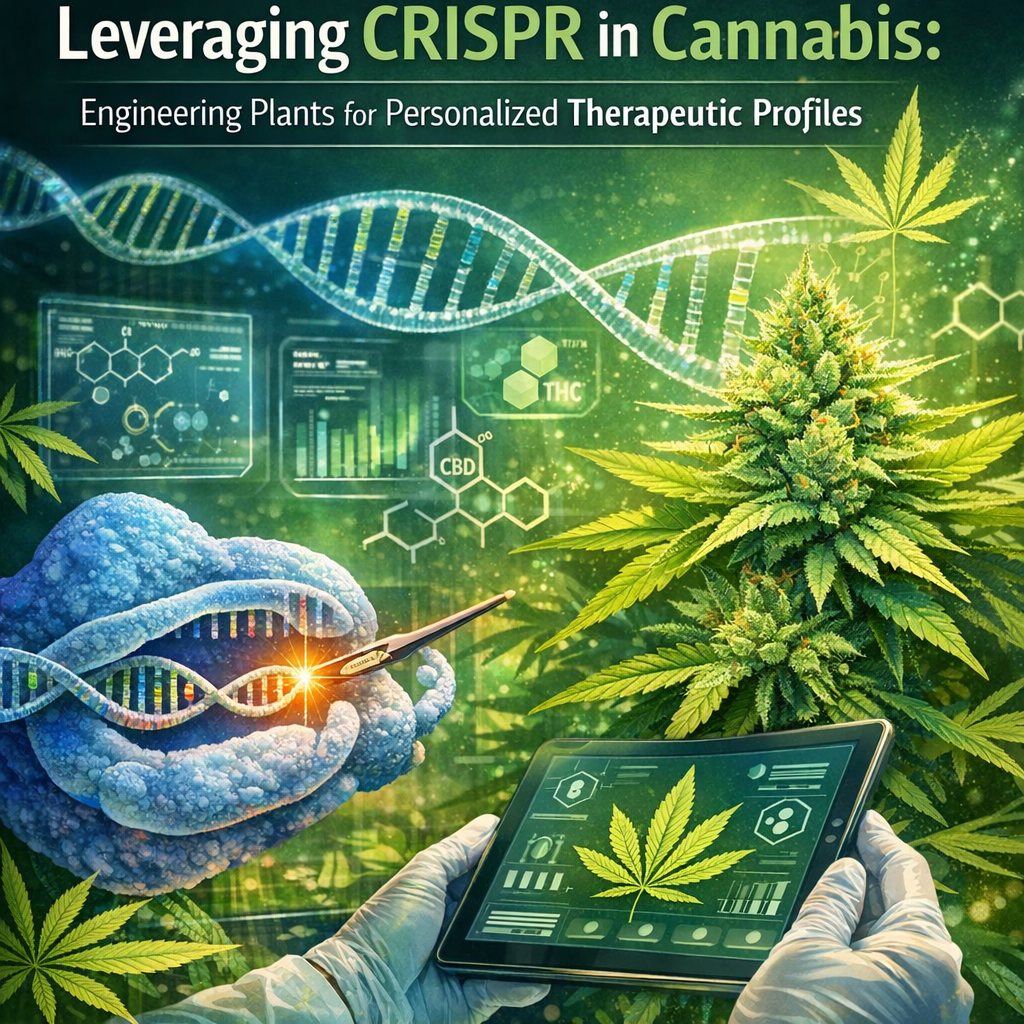
Leveraging CRISPR in Cannabis: Engineering Plants for Personalized Therapeutic Profiles
Introduction
The convergence of medical cannabis and genetic engineering is unlocking unprecedented opportunities in plant science and personalized medicine. At the forefront is CRISPR (Clustered Regularly Interspaced Short Palindromic Repeats), a revolutionary gene-editing technology enabling precise changes to the DNA of living organisms. While CRISPR is renowned for its potential to eradicate genetic disorders in humans, its application in cannabis research has generated significant excitement among scientists and industry professionals.
In recent years, the rapid expansion of cannabis legalization and growing awareness of its therapeutic benefits have fueled a drive to optimize the plant’s genetic profile for specific medical uses. Cannabis is a complex plant with over 100 cannabinoids, including THC and CBD. Each cannabinoid possesses unique effects and therapeutic potential. With CRISPR, researchers can now fine-tune these cannabinoid profiles, leading to the creation of cannabis strains tailored to individual health needs. Such advances promise enhanced efficacy in treating conditions like chronic pain, epilepsy, and PTSD.
The potential to engineer cannabis plants with specific cannabinoid ratios and terpene profiles could revolutionize personalized medicine. By customizing these chemical outputs, patients receive treatments directly aligned with their genetic make-up and specific conditions. This personalized approach increases the potential effectiveness of cannabis-based therapies while minimizing side effects. As the biopharmaceutical landscape evolves, integrating CRISPR into cannabis research represents a paradigm shift towards targeted, personalized therapeutic solutions.
Features
CRISPR’s entry into cannabis research has already begun yielding promising results. A study published in [*Plant Physiology*](https://academic.oup.com/plphys/article/180/3/1202/6116143) demonstrated the potential of CRISPR-Cas9 technology to edit genes involved in cannabinoid biosynthesis, allowing scientists to potentially increase or inhibit certain compound productions. This insight is critical in creating strains with optimal therapeutic profiles customized to patient requirements.
Another pivotal study from [*Frontiers in Plant Science*](https://www.frontiersin.org/articles/10.3389/fpls.2020.573680/full) highlighted how CRISPR could enhance not only cannabinoid content but also other plant features such as growth rate and resilience to pests and environmental stressors. These advancements can reduce production costs and ensure a stable supply of high-quality cannabis, ushering in a new era of agricultural efficiency and sustainability.
Further opportunities arise from leveraging bioinformatics alongside CRISPR to better understand and map the cannabis genome. Integrating AI and machine learning technologies with CRISPR-driven research enables the analysis of vast amounts of genetic data, leading to correlations between genetic edits and phenotypic expressions. This interdisciplinary integration accelerates the production of cannabis varieties optimized for individualized health profiles ([*BMC Genomics*](https://bmcgenomics.biomedcentral.com/articles/10.1186/s12864-019-6049-x)).
Despite CRISPR’s transformative potential in cannabis research, ethical and legal considerations must be addressed. The regulation of genetically modified organisms (GMOs) varies across jurisdictions, necessitating ongoing dialogue between scientists, policymakers, and the public to ensure responsible use of this powerful technology. Stringent oversight and thorough risk assessments are essential to address public concerns and uphold the safety and ethical integrity of CRISPR applications in cannabis.
Conclusion
The integration of CRISPR technology in cannabis cultivation is set to revolutionize personalized medicine by producing strains tailored to individual therapeutic needs. As research expands and methodologies improve, CRISPR presents an opportunity not only to enhance the efficacy and precision of medical cannabis but also to contribute to a sustainable agricultural future. By bridging the gap between genetic potential and therapeutic needs, CRISPR-engineered cannabis holds the key to unlocking new dimensions in health and wellness.
References
– [*Plant Physiology*: CRISPR-Cas9 Gene Editing of Cannabis](https://academic.oup.com/plphys/article/180/3/1202/6116143)
– [*Frontiers in Plant Science*: CRISPR Applications in Cannabis Improvement](https://www.frontiersin.org/articles/10.3389/fpls.2020.573680/full)
– [*BMC Genomics*: Integrating Bioinformatics and CRISPR in Cannabis](https://bmcgenomics.biomedcentral.com/articles/10.1186/s12864-019-6049-x)
Concise Summary
The integration of CRISPR technology in cannabis research is transforming personalized medicine by enabling precise genomic modifications to create cannabis strains optimized for individual therapeutic needs. This innovation in gene-editing not only enhances the efficacy and precision of cannabis-based therapies, addressing ailments like chronic pain, epilepsy, and PTSD, but also promotes sustainable agriculture. However, the pursuit of these advancements necessitates navigating ethical and legal hurdles related to GMOs. With ongoing research, CRISPR holds the potential to unlock new dimensions in human health and wellness through personalized medical solutions.