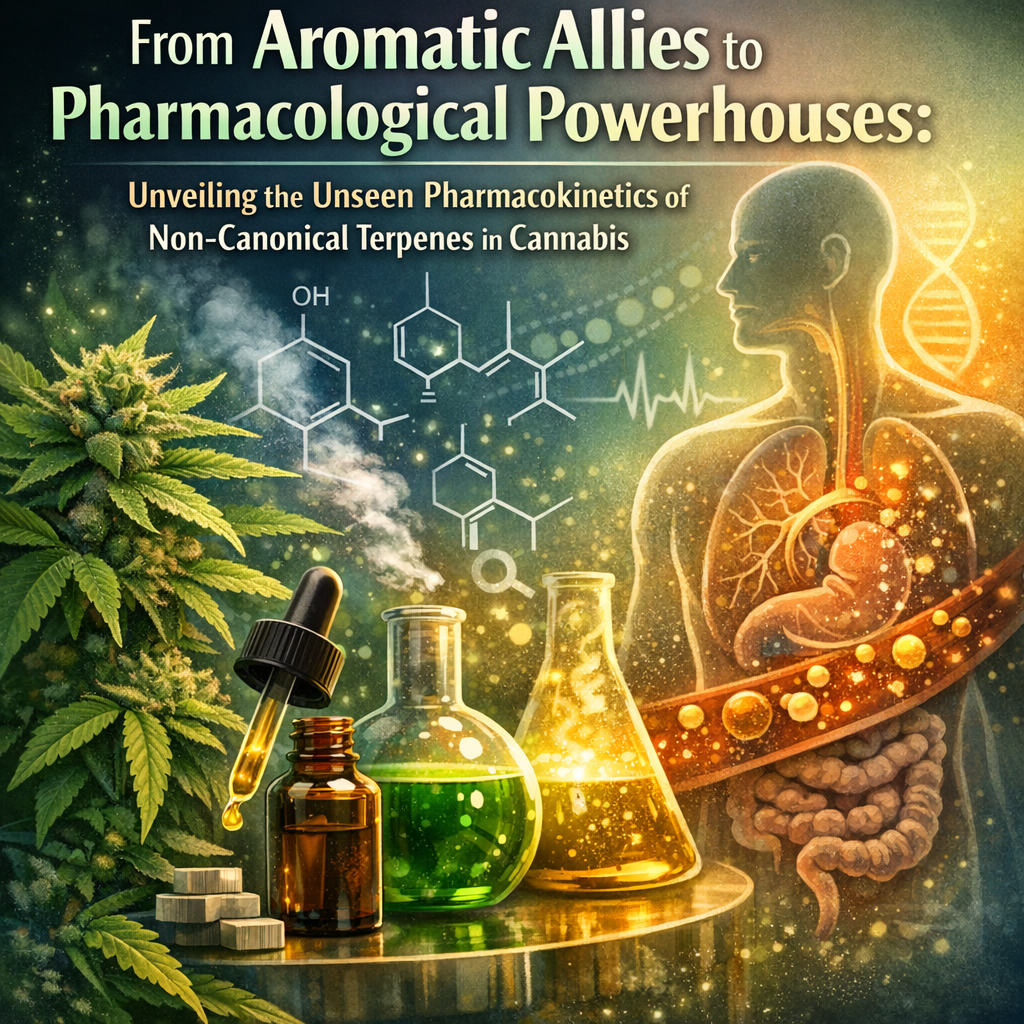
From Aromatic Allies to Pharmacological Powerhouses: Unveiling the Unseen Pharmacokinetics of Non-Canonical Terpenes in Cannabis
Introduction
Cannabis, a versatile plant, has drawn significant attention for its wide-ranging therapeutic applications. Traditionally, the spotlight has been on cannabinoids—particularly THC and CBD—for their psychoactive and medicinal properties. However, recent research is beginning to highlight another crucial component: terpenes. These aromatic compounds not only contribute to the scents and flavors of cannabis but also hold potential therapeutic benefits. Among these, non-canonical terpenes like bisabolol, nerolidol, and guaiol are gaining attention for their unique pharmacokinetic properties. While these terpenes were previously lower in research priority, they are now recognized as pharmacological powerhouses with significant therapeutic potential. For instance, bisabolol offers anti-inflammatory and analgesic properties, known traditionally in chamomile. Nerolidol demonstrates antifungal and antioxidant benefits. With global cannabis legalization, the demand for personalized treatment options is fueling exploration of these lesser-known terpenes. Understanding the pharmacokinetics—absorption, distribution, metabolism, and excretion—of these compounds is crucial for optimizing therapeutic effects. The entourage effect, highlighting the synergy between cannabinoids and terpenes, significantly informs cannabis application strategies, making the study of these aromatic allies imperative.
Features
Numerous studies underscore the growing body of evidence supporting the pharmacological benefits of non-canonical terpenes. For instance, a study published in the Journal of Natural Products explored bisabolol’s abilities beyond cosmetic uses, finding it a potent anti-inflammatory agent capable of modulating cytokine activity and reducing oxidative stress.
Nerolidol has shown diverse applications. A study in the International Journal of Molecular Sciences revealed nerolidol’s capacity to enhance the penetration of therapeutic molecules across the skin barrier, suggesting its role in transdermal cannabis applications. It also exhibited neuroprotective properties, indicating potential use in managing neurodegenerative diseases.
Another example is guaiol, less frequently mentioned but with profound implications. Research published in Rupture revealed its antibacterial properties, highlighting potential use against antibiotic-resistant infections, a finding significant in the context of rising antibiotic resistance.
Understanding the pharmacokinetics of these non-canonical terpenes, including their absorption and metabolic pathways, is critical. This understanding aids in developing more effective delivery mechanisms and formulations, optimizing the therapeutic effects. Advancements in analytical technologies, like high-performance liquid chromatography and mass spectrometry, have enabled deeper analysis of these complex compounds and their interactions within the human body.
Conclusion
In the evolving landscape of cannabis research, exploring non-canonical terpenes offers exciting opportunities for therapeutic innovation. These aromatic allies are transitioning into recognized pharmacological powerhouses, revealing new dimensions of cannabis efficacy and enriching our understanding of plant medicine. Through continuous research and application, these terpenes promise to transform cannabis therapies, moving beyond aromatics to the forefront of pharmacokinetics.
Concise Summary:
Cannabis research is increasingly spotlighting non-canonical terpenes—like bisabolol, nerolidol, and guaiol—for their pharmacological benefits. These terpenes, previously less studied, are found to possess significant therapeutic potential, notably anti-inflammatory, neuroprotective, and antibacterial properties. Understanding their pharmacokinetics—how they are absorbed, metabolized, and excreted—can significantly enhance cannabis product formulations. This knowledge, alongside the entourage effect—the synergy between cannabinoids and terpenes—offers avenues to optimize therapeutic applications, marking a new frontier in cannabis therapies.