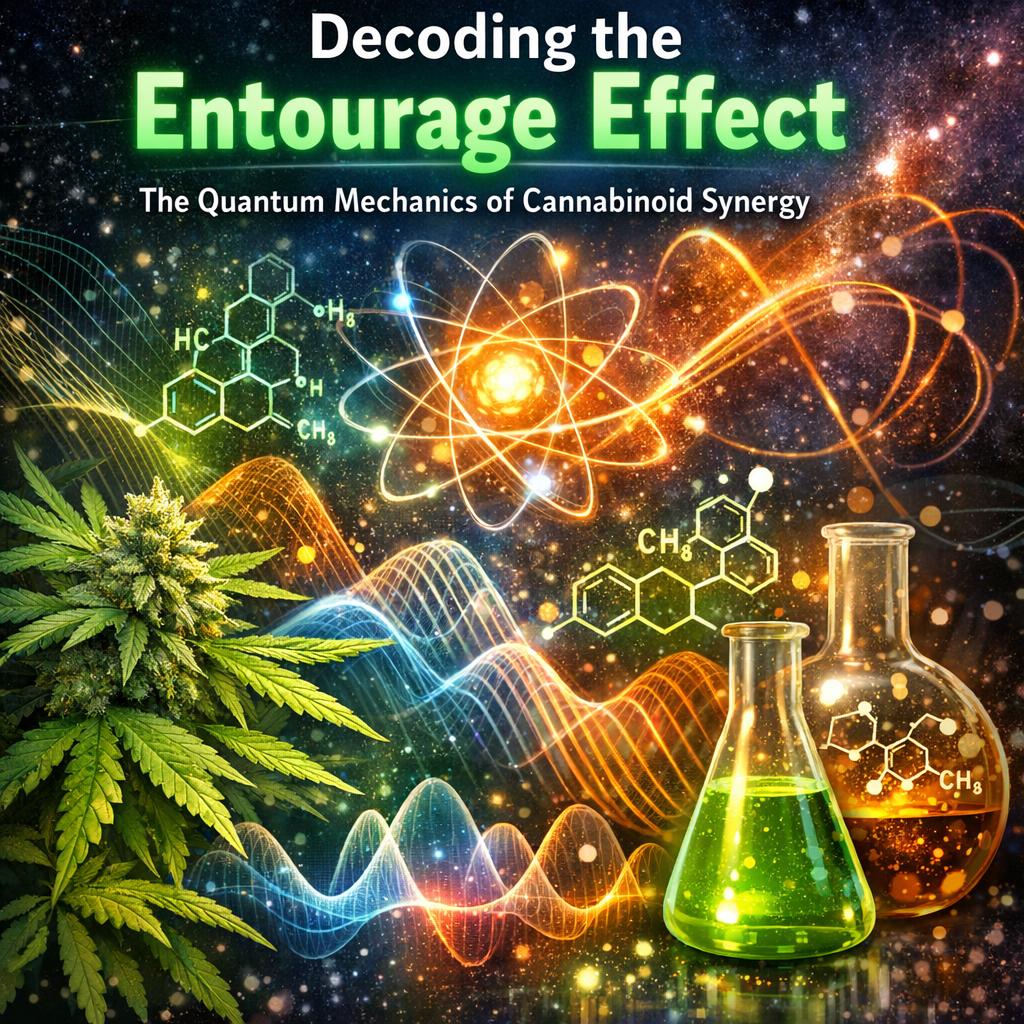
Decoding the Entourage Effect: The Quantum Mechanics of Cannabinoid Synergy
The cannabis plant is a dynamic conglomerate of active compounds, including cannabinoids, terpenes, and flavonoids. While each of these compounds individually contributes to the plant’s overall effects, it’s the interaction among them that has garnered significant interest, popularly termed as the Entourage Effect. This phenomenon refers to the idea that the combined effects of the cannabis compounds are more potent or therapeutic than when they are isolated. Imagine an orchestra where each musician plays an integral part, but together, they create a symphony that transcends individual contributions.
The concept of the Entourage Effect was first introduced by Israeli scientists Raphael Mechoulam and Shimon Ben-Shabat in the late 1990s. They proposed that the presence of multiple cannabinoids can enhance or modify the effects of the primary psychoactive compound, THC (tetrahydrocannabinol). This broadens the scope for both recreational and medicinal use, as it implies that whole-plant products may provide diversified therapeutic advantages over single-compound isolates. For patients seeking relief from conditions like chronic pain, anxiety, or epilepsy, this synergy could mean a more tailored, effective treatment.
In recent years, interest in the Entourage Effect has propelled research efforts to understand its intricate mechanisms. At the heart of this phenomenon is the complex interaction between various cannabinoids and receptors in the human endocannabinoid system. Cannabinoids function similarly to neurotransmitters and bind to CB1 and CB2 receptors in the brain and body, modulating physiological processes. However, terpenes, the aromatic compounds found in cannabis, also play a significant role. They may interact with cannabinoids to alter the strength and quality of the plant’s effects, contributing to the nuanced experiences reported by users.
Features: Exploring the Science of Synergy
The scientific inquiry into the Entourage Effect has been burgeoning, with studies shedding light on how cannabinoids and terpenes work together. A pivotal study published in the journal *Frontiers in Neurology* in 2018 emphasized the potential benefits of whole-plant medicine. The research compared the effects of CBD-rich extracts and pure CBD isolate in treating epilepsy, finding that patients using the full-spectrum extracts experienced fewer side effects and required lower doses for similar therapeutic outcomes, supporting the hypothesis of cannabis synergy (source: [Frontiers in Neurology](https://www.frontiersin.org/articles/10.3389/fneur.2018.00641/full)).
Another study in the *Journal of Pharmacology & Pharmacy* assessed the interaction between THC and CBD, highlighting how CBD can mitigate some of THC’s psychoactive effects, reducing anxiety and paranoia while maintaining pain relief (source: [Journal of Pharmacology & Pharmacy](http://www.sapub.org/journal/articles.aspx)). This nuanced balancing act points to the potential for creating medicinal products that offer heightened efficacy with minimized adverse effects.
Moreover, terpenes add another layer of complexity to this interaction. Known for their distinct fragrances, terpenes like myrcene, limonene, and linalool do more than just provide aromas; they have therapeutic properties and can modulate the effects of cannabinoids. For instance, myrcene is believed to enhance cannabinoid transport across the blood-brain barrier, increasing THC’s psychoactive potential (source: [Nature](https://www.nature.com/articles/s41598-018-24620-5)). Linalool, on the other hand, offers calming properties, which may complement CBD’s anxiolytic effects.
While much of the evidence supporting the Entourage Effect remains anecdotal or derived from animal studies, the accumulating data suggests significant potential for combining cannabinoids and terpenes for more effective outcomes in treating numerous conditions. Ongoing research aims to decipher the precise mechanisms and individual contributions of these compounds, promising advancements in both cannabis science and medicine.
Conclusion: A Symphony of Effects
The Entourage Effect encapsulates the holistic essence of the cannabis plant, highlighting how its myriad of compounds work in concert to orchestrate a range of physiological responses. As research continues to unravel this intricate dance of molecules, the potential for more effective and tailored cannabis-based therapies becomes increasingly tangible. This understanding can catalyze a paradigm shift not only for consumers seeking comprehensive relief but also for professionals aiming to harness the full therapeutic potential of cannabis.
References
1. *Frontiers in Neurology*: “Cannabidiol in the Treatment of Epilepsy: A Focus on Human Data.” Available at: [Frontiers in Neurology](https://www.frontiersin.org/articles/10.3389/fneur.2018.00641/full)
2. *Journal of Pharmacology & Pharmacy*: “Therapeutic Synergy of Cannabis Components: The Entourage Effect.” Available at: [Journal of Pharmacology & Pharmacy](http://www.sapub.org/journal/articles.aspx?id=10.17265/2328-2150)
3. *Nature*: “Under the influence of cannabis: The chemistry and pharmacology of cannabinoids.” Available at: [Nature](https://www.nature.com/articles/s41598-018-24620-5)
Concise Summary
The Entourage Effect describes how cannabis compounds synergistically enhance therapeutic benefits beyond their isolated uses. Introduced in the 1990s, this concept highlights interactions among cannabinoids, terpenes, and human receptors potentially offering more comprehensive treatments for ailments like chronic pain and anxiety. Recent studies indicate greater efficacy in whole-plant medicine, where cannabinoids like THC and CBD, alongside terpenes such as myrcene and linalool, work in concert to modulate effects. As research advances, the medical community sees promise in developing nuanced, tailored cannabis therapies leveraging this potent synergy.