Harnessing Quantum Biology: The Future of Cannabis Cultivation and its Unseen Potential
Introduction
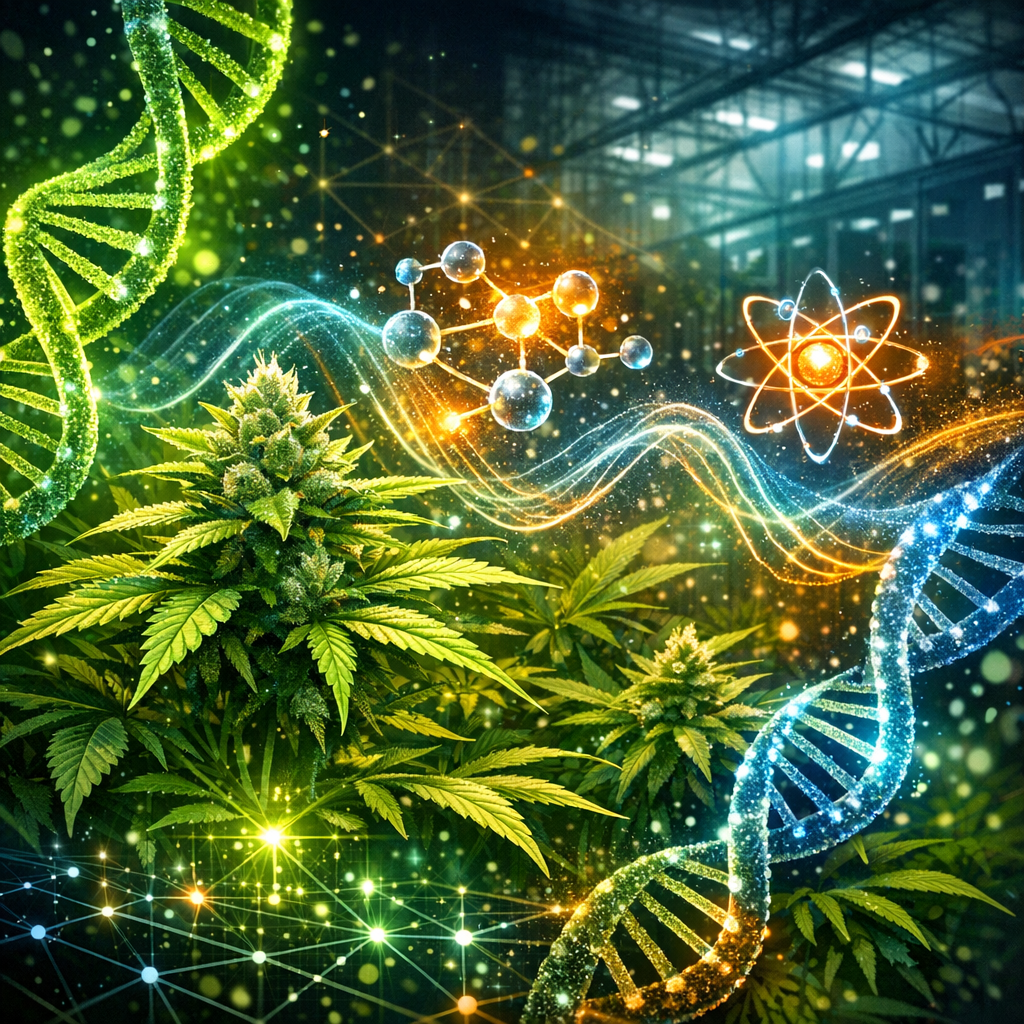
In recent years, the fields of cannabis cultivation and scientific research have been advancing at lightning speed. However, the inclusion of quantum biology in cannabis cultivation is a truly revolutionary concept that is just beginning to gain traction. As we look deeper into the building blocks of life, quantum biology provides a fresh perspective on understanding the intricate mechanisms involved in plant growth and development. This avant-garde discipline explores how quantum phenomena—such as superposition, entanglement, and tunneling—play a critical role in biological systems. With cannabis, a plant prized not just for its psychoactive compounds but also its therapeutic potential, the intersection of quantum biology opens a new frontier in optimizing cultivation.
Cannabis cultivation has mostly revolved around manipulating physical factors like light, water, nutrients, and soil pH to maximize yield and potency. While these parameters remain significant, they don’t account for the molecular and quantum-level interactions that determine a plant’s overall health. Quantum biology offers insights into how electron transfers and molecular interactions take place at a near-instantaneous speed—factors that could be manipulated to enhance specific traits in cannabis, whether it be THC levels, terpene profiles, or even disease resistance.
For instance, quantum coherence, which is a phenomenon observed in photosynthesis, indicates that plants possibly utilize quantum processes to maintain efficiency during energy transfer. Applying these insights to cannabis cultivation entails optimizing environmental conditions that foster such quantum states, thereby potentially producing a healthier, more robust plant. Moreover, these discoveries could reduce the environmental impact of cannabis farming by increasing energy efficiency and reducing resource use.
Ultimately, the fusion of quantum biology with cannabis cultivation presents an opportunity to push beyond traditional agricultural methods. By tapping into the mechanisms that govern life at a subatomic level, we not only have the capacity to enhance the effectiveness and sustainability of cannabis production but also to unlock new therapeutic potentials in this multi-faceted plant.
Features
One of the most exciting facets of quantum biology in relation to cannabis cultivation involves photosynthesis. The process of photosynthesis is pivotal for plant growth, and researchers have started to delve into how quantum mechanics can optimize this vital function. A groundbreaking study published in Nature Physics found that quantum coherence can enhance the efficiency of energy transfer during photosynthesis, suggesting that understanding these mechanisms could improve crop yields.
Researchers are now investigating how these principles can be applied to controlled growing environments, where mimicking quantum-efficient conditions may significantly influence the quality and yield of cannabis plants. For instance, by tuning specific wavelengths of light that match the plant’s natural quantum states, cultivators could potentially enhance various growth stages and improve cannabinoid production.
Furthermore, studies have shown that the interpretation of quantum phenomena could transform genetic manipulation techniques. Quantum tunneling is a phenomenon that allows particles to pass through energy barriers, which could theoretically be harnessed to activate or deactivate certain genetic switches within the plant. This could pave the way for customized strains with specific therapeutic qualities, allowing growers to cultivate cannabis that targets certain medical needs more effectively [source](https://www.sciencedaily.com/releases/2018/03/180315095305.htm).
In a controlled laboratory setting, understanding entanglement and superposition may also improve ethical and sustainable practices. By reducing resource intensity with more precise interventions, quantum biology holds the promise of minimizing the energy consumption associated with indoor cannabis farming, consequently lowering its carbon footprint.
As research continues to explore these phenomena, the cannabis industry could benefit from adopting a multidisciplinary approach that combines quantum physics, biology, and agricultural science to optimize efficiency and product specificity. Academic institutions and private enterprises alike are moving towards more comprehensive studies that look at how these quantum phenomena can be translated into practical applications in the field of cannabis cultivation.
Conclusion
Quantum biology presents an uncharted territory with staggering potential for revolutionizing cannabis cultivation. By infusing principles of quantum physics into agricultural methods, we stand on the brink of a new era of efficiency, sustainability, and therapeutic advancement within the cannabis industry. As research evolves, the seamless blend of these cutting-edge sciences holds the promise of not only enhancing the cannabis plant’s agricultural yield and variety but also unlocking unprecedented therapeutic potentials that could benefit countless lives.
Concise Summary
The integration of quantum biology into cannabis cultivation is poised to revolutionize the industry by enhancing plant growth efficiency and sustainability. By applying quantum phenomena such as superposition, entanglement, and tunneling to cannabis, researchers aim to optimize photosynthesis and genetic manipulation, potentially increasing crop yields and developing strains with specific therapeutic properties. As the field advances, this multidisciplinary approach promises to decrease the carbon footprint of cannabis farming and unlock newfound therapeutic benefits, marking a significant shift in the fusion of quantum physics, biology, and agricultural science.