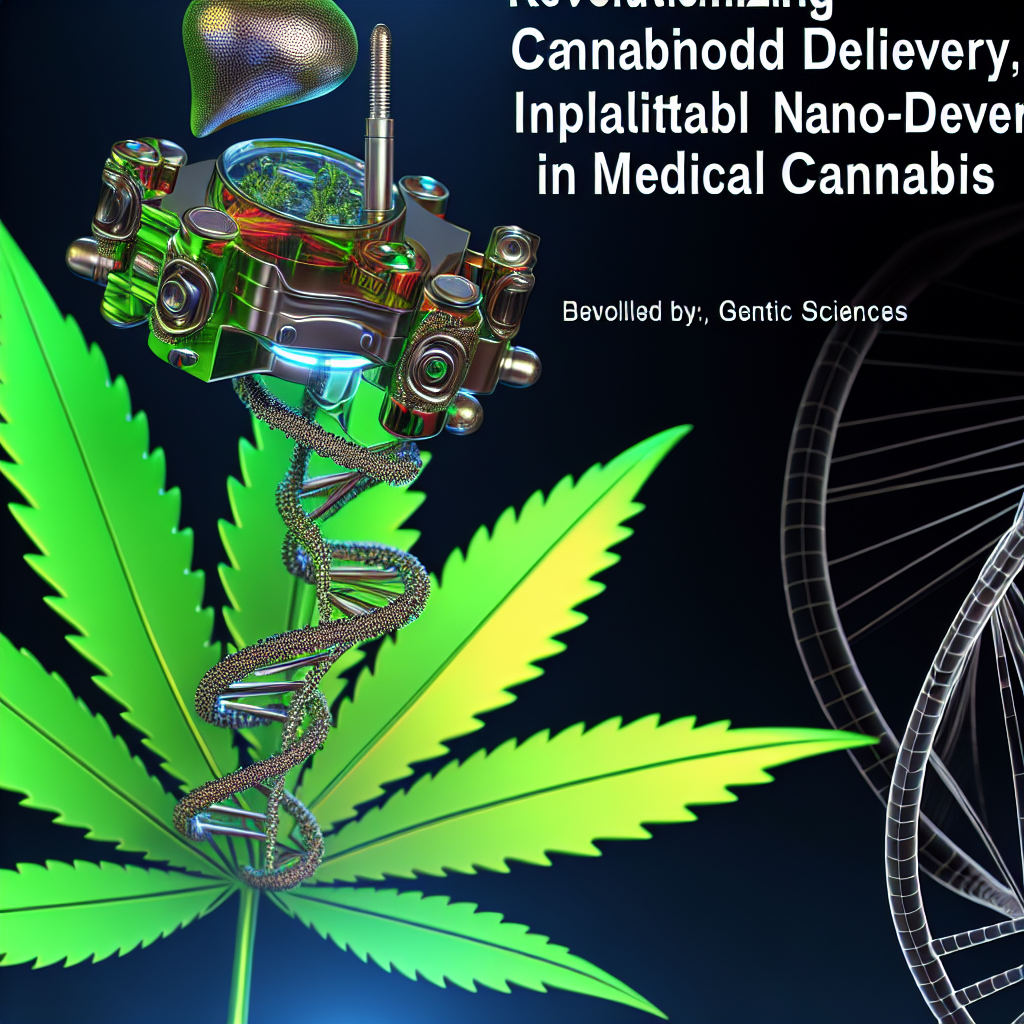
Revolutionizing Cannabinoid Delivery: The Future of Implantable Nano-Devices in Medical Cannabis
Introduction
The field of medical cannabis is evolving rapidly. Researchers and scientists are pushing the boundaries to enhance how cannabinoids are delivered for maximum therapeutic benefit. Among recent developments is the exploration of implantable nano-devices for cannabinoid delivery. As the wide-ranging benefits of cannabinoids, primarily CBD and THC, become clearer in managing conditions like pain, inflammation, epilepsy, and some neurodegenerative disorders, optimizing delivery methods is critical. Traditional methods, such as oral ingestion or inhalation, often have drawbacks including variable bioavailability, delayed onset, and inconsistent dosing.
Enter the revolutionary concept of implantable nano-devices. These miniature devices, working on nanotechnology principles, can be embedded under the skin to provide a controlled, sustained release of cannabinoids directly into the bloodstream. This approach not only enhances the bioavailability and provides a consistent therapeutic dose but also significantly impacts patient compliance and overall treatment efficacy. Considering the chronic nature of many conditions treated by medical cannabis, this method can provide steady and reliable relief, thereby improving patients’ quality of life.
Furthermore, implantable nano-devices can be programmed to release cannabinoids responding to specific physiological triggers. This paves the way for personalized cannabinoid therapy. Devices could potentially react to inflammation markers or seizure precursors, releasing CBD or THC only when needed, minimizing potential side effects from constant cannabinoid presence.
This promising field is supported by growing research indicating that nanoparticles can enhance drug delivery efficiency and efficacy. While clinical applications in cannabinoid delivery are still developing, the potential is enormous. The integration of technology and medical cannabis offers a future where cannabinoid therapy is more precise, efficient, and personalized.
Features
Several promising studies advocate the application of nanotechnology in drug delivery, paving the way for innovations in cannabinoid therapies. For instance, a study in the Journal of Controlled Release highlights how nanoparticles improve cannabinoid delivery through better solubility and stability, facilitating superior absorption into the bloodstream compared to conventional methods.
In a pivotal study published in Nanomaterials, researchers demonstrated that nanoparticle carriers could be designed to release drugs over extended periods, reducing dosing frequency and improving patient adherence to treatment regimes. The adaptability of nanoparticles was emphasized, revealing their potential to be engineered to release drugs in response to specific stimuli, such as pH or temperature shifts, enhancing smart cannabinoid delivery systems.
Specific to cannabinoids, research by the American Chemical Society illustrated that encapsulating CBD within a lipid-based nanoparticle significantly increased its bioavailability, yielding more consistent therapeutic effects. These studies underscore the potential use of nano-carriers in optimizing cannabinoid therapy, setting the stage for implantable forms for continuous delivery.
Moreover, university-led research discussed in Bioinspiration & Biomimetics explored bio-compatible materials for implantable devices. These materials are designed to effectively release drugs while being well-tolerated by the human body, reducing risks of rejection or adverse reactions.
Ongoing trials and technological advancements signal that the promise of implantable nano-devices is gaining momentum, offering new hope for consistent, efficacious cannabinoid delivery. Interdisciplinary collaboration—spanning nanotechnology, pharmacology, and medicine—is essential to overcome current limitations and transition innovations from the lab to clinical settings.
Conclusion
As the medical cannabis landscape transforms, implantable nano-devices represent a groundbreaking step forward in cannabinoid delivery. By merging cutting-edge nanotechnology with personalized medicine, we can anticipate a future where cannabinoids are administered more efficiently and effectively, paving the way for enhanced patient outcomes. While more research is necessary, the potential to revolutionize medical cannabis delivery and elevate therapeutic standards is promising. The intersection of technology and cannabinoid science truly heralds a new era of precision in healthcare.
References
– Journal of Controlled Release
– Nanomaterials
– American Chemical Society
– Bioinspiration & Biomimetics
Concise Summary
Implantable nano-devices are positioned to transform cannabinoid delivery in medical cannabis, ensuring precise, sustained release directly into the bloodstream, enhancing bioavailability and therapeutic consistency. This innovative approach aims to improve patient compliance and treatment efficacy for chronic conditions while allowing personalized therapy by triggering drug release with specific physiological markers. Despite being in its early stages, the integration of nanotechnology with cannabinoid therapy offers significant promise for future healthcare advancements. Ongoing research and interdisciplinary collaboration are crucial to realizing the full potential of this revolutionary delivery method.