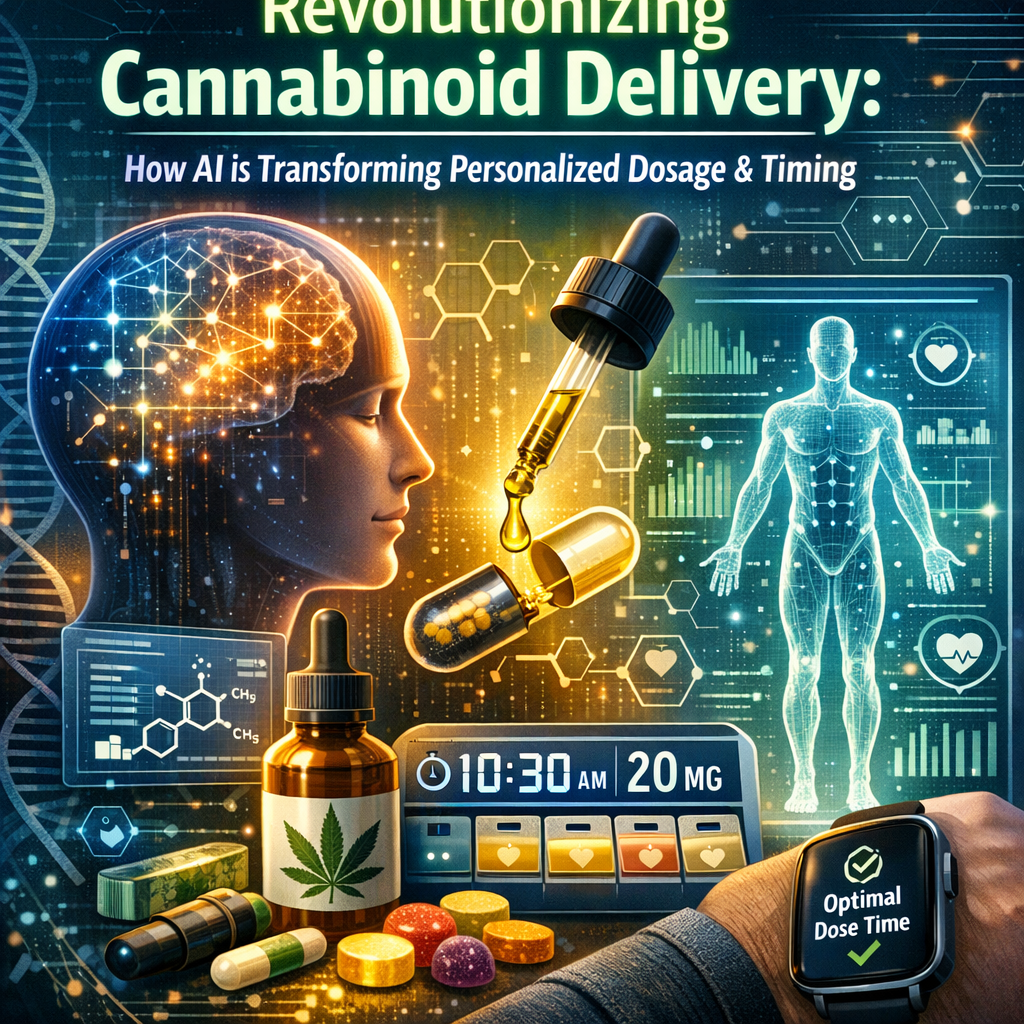
Revolutionizing Cannabinoid Delivery: How AI is Transforming Personalized Dosage & Timing
Introduction
The landscape of cannabinoid delivery is undergoing a significant transformation, thanks to the integration of artificial intelligence (AI) technologies. As the legal cannabis industry continues to expand, so does the demand for precision and personalization in how cannabinoids like THC and CBD are consumed. Historically, individuals using cannabis for medical or recreational purposes faced challenges in optimizing dosage and timing, relying heavily on trial and error. However, the evolving synergy between cannabis science and AI is setting the stage for a more sophisticated approach, which could redefine how consumers and professionals view cannabinoid consumption.
AI, with its capability to process vast datasets and identify patterns, is paving the way for a new era of personalized medicine. In the domain of cannabis, AI can analyze a range of variables, including individual health data, genetic predispositions, and lifestyle factors, to recommend precise cannabinoid dosages. This reduces guesswork and enhances the efficacy of cannabis treatments.
Additionally, timing is a crucial component of cannabinoid therapy. Different cannabinoids exhibit varying effects based on the time of day they are consumed. AI algorithms can track an individual’s response to cannabinoids throughout the day, enabling the development of scheduling systems that optimize therapeutic outcomes. With AI’s assistance, individuals can avoid the peaks and troughs often experienced with traditional dosage methods, maintaining a steady state of relief or desired effect.
Features
Recent medical studies and professional insights highlight the transformative role of AI in cannabinoid delivery. A 2021 study published in the [*Journal of Medical Internet Research*](https://www.jmir.org/2021/7/e21969) explored AI-driven platforms in optimizing cannabis dosages for medical use. The researchers found that AI can accurately analyze patient data to tailor treatments, improving user satisfaction and treatment efficacy. These platforms use algorithms trained on thousands of data points, from past user experiences to genetic markers, to predict ideal dosages and delivery methods for individual users.
Further research in the [*Frontiers in Pharmacology*](https://www.frontiersin.org/articles/10.3389/fphar.2021.685602/full) journal examined the timing of cannabinoid administration. The study emphasized the endocannabinoid system’s role in circadian rhythm regulation and how AI could synchronize cannabinoid intake with the body’s natural rhythms. Such timing can modulate mood disorders, manage chronic pain, and influence appetite control, offering patients a new dimension of therapy management.
Pharmaceutical companies and cannabis firms recognize AI’s potential. Cannabinoid tracking apps, infused with AI technology, are on the rise, designed to help users understand their unique interaction with cannabis. These apps collect data such as user-reported outcomes, environmental factors, and usage patterns. The insights from this data guide consumers in making more informed decisions about cannabis use. Additionally, AI-powered diagnostic tools are making inroads in clinics, assisting healthcare providers in recommending precise cannabis treatments based on a patient’s health records and lifestyle habits.
Beyond consumer applications, AI is advancing cannabis research and development, enabling the synthesis of novel cannabinoid compounds with specific therapeutic targets. AI’s predictive capabilities reduce the time and cost involved in developing new products, ensuring that the industry remains innovative and responsive to consumer needs.
Conclusion
The integration of AI into cannabinoid delivery opens avenues in personalized medicine. By harnessing AI, both consumers and healthcare professionals benefit from more precise, efficient, and effective cannabinoid therapies. As AI technologies evolve, they promise greater advancements in understanding and utilizing cannabis, marking the beginning of a new chapter in personalized medicine.
Concise Summary
The integration of AI into cannabinoid delivery is revolutionizing personalized medicine. AI analyzes personal health data and lifestyle factors, optimizing cannabinoid dosages and timings for individual needs. This technological advancement enhances treatment efficacy and user satisfaction, benefiting both consumers and healthcare providers. AI-driven apps and tools are guiding informed decisions and refining diagnostic processes. Additionally, AI accelerates cannabis research, facilitating the development of novel cannabinoid compounds. This progress not only personalizes therapy but also propels the cannabis industry toward innovative solutions, heralding a new era in precision medicine.