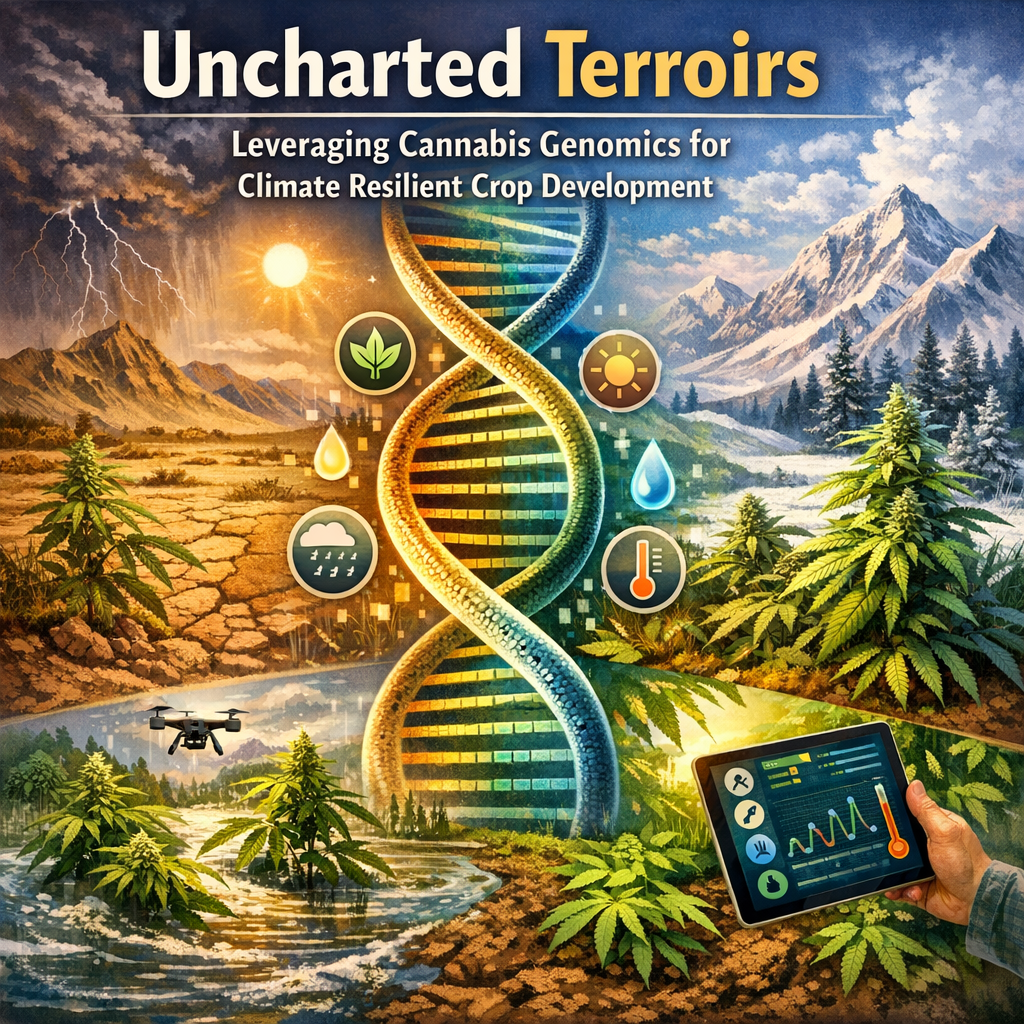
Uncharted Terroirs: Leveraging Cannabis Genomics for Climate Resilient Crop Development
Introduction
Cannabis, a plant with a deeply rooted history in medicinal, recreational, and industrial spheres, is experiencing a renaissance as global demand escalates. However, this burgeoning popularity corresponds with an undeniable reality — the impact of climate change on agricultural industries. This juxtaposition presents both a challenge and an opportunity: how can we ensure the sustainable cultivation of cannabis in an era of global environmental uncertainty? Enter cannabis genomics, an evolving field that presents promising solutions for developing climate-resilient crops.
Since its rediscovery as a valuable crop, cannabis has piqued the interest of agronomists and geneticists alike. Its diverse genetic makeup is rich with untapped potential, offering unique traits that could enhance resilience against changing climates. Understanding and leveraging this genetic diversity is key to developing strains capable of thriving in varied environments — from arid regions to those facing unpredictable weather patterns.
Traditionally, cannabis cultivation depended heavily on local knowledge and practices. However, with the power of genomics, breeders can now pinpoint specific genetic markers linked to desirable traits such as drought tolerance, pest resistance, and nutrient efficiency. This scientific precision paves the way for breeding programs designed not only for yield and potency but for survival under ecological stressors attributed to climate change. The broader use of genomics stands to revolutionize how crops adapt, providing innovative solutions in agriculture.
Incorporating insights from cannabis genomics can expand the geographical regions suitable for cultivation, economically empowering farmers worldwide. This adaptability is crucial in regions where climate change threatens agricultural output, providing a sustainable alternative that strengthens local and global economies. Furthermore, environmentally resilient cannabis cultivation aligns with broader ecological goals, potentially reducing the cultivation footprint through optimized resource use and decreasing reliance on water and fertilizers.
In this article, we delve into the principles of cannabis genomics, exploring current research and potential applications. We examine how understanding the plant’s genetic framework can be the cornerstone of cultivating robust crops ready to meet the challenges posed by our changing world.
Features
Cannabis genomics is a rapidly growing field with significant implications for developing climate-resilient crops. Recent professional and medical studies provide crucial insights into genetic mechanisms that can be harnessed to enhance cannabis’s adaptability to a changing climate.
Research has focused extensively on the plant’s genome — a complex arrangement of genetic material that dictates everything from growth patterns to cannabinoid production. A pivotal study, published in [Nature Genetics](https://www.nature.com/articles/s41588-020-00761-8), sequenced the cannabis genome, uncovering insights into genes related to flowering time, cannabinoid biosynthesis, and disease resistance. This foundational knowledge serves as a roadmap for breeding programs focused on climate resilience.
Further studies have examined specific genetic traits associated with climatic adaptability. For example, a study by the [University of Colorado Boulder](https://www.colorado.edu/today/2021/04/14/genetic-markers-drought-resistant-cannabis) identified specific genetic markers associated with drought resistance in cannabis. These markers can guide the development of strains that require less water, crucial for regions experiencing increased aridity.
Moreover, pest and disease resistance are critical areas of focus. As climate change alters pest populations and disease patterns, cannabis crops must exhibit resilience to these newfound threats. Researchers from [McGill University](https://www.mcgill.ca/newsroom/channels/news/discovery-genetic-keys-cannabis-plants-rare-therapeutic-properties-331256) have made strides in identifying genes that bolster the plant’s natural defenses, offering a blueprint for cultivating hardier crops.
These studies underscore the potential of cannabis genomics as a transformative tool for sustainable agriculture. By identifying and amplifying genetic traits responsible for climate resilience, breeders can develop strains that not only survive but thrive amidst environmental volatility. This adaptive approach echoes larger agricultural trends seeking to balance productivity with ecological stewardship.
Conclusion
Harnessing the power of cannabis genomics offers a promising path forward for developing climate-resilient crops. As research continues to uncover the genetic diversity within this plant, the potential for groundbreaking applications in agricultural sustainability becomes increasingly apparent. By leveraging these insights, we can ensure that cannabis cultivation remains viable, sustainable, and profitable in an era defined by environmental change — laying a foundation for a greener, more resilient future.
References
1. Nature Genetics study – [View Study](https://www.nature.com/articles/s41588-020-00761-8)
2. University of Colorado Boulder drought resistance study – [View Study](https://www.colorado.edu/today/2021/04/14/genetic-markers-drought-resistant-cannabis)
3. McGill University pest and disease resistance study – [View Study](https://www.mcgill.ca/newsroom/channels/news/discovery-genetic-keys-cannabis-plants-rare-therapeutic-properties-331256)
Concise Summary: Cannabis genomics offers innovative solutions for a climate-resilient future by utilizing the plant’s genetic diversity to develop strains adaptable to diverse environments. This scientific precision expands cultivation regions, economically empowering farmers and aligning with ecological goals through optimized resource use. Pivotal studies have identified genetic markers for drought tolerance and disease resistance, underscoring cannabis genomics as a transformational tool in sustainable agriculture. This enhances crop resilience amidst changing climates, ensuring productivity and environmental stewardship in the agricultural sector.