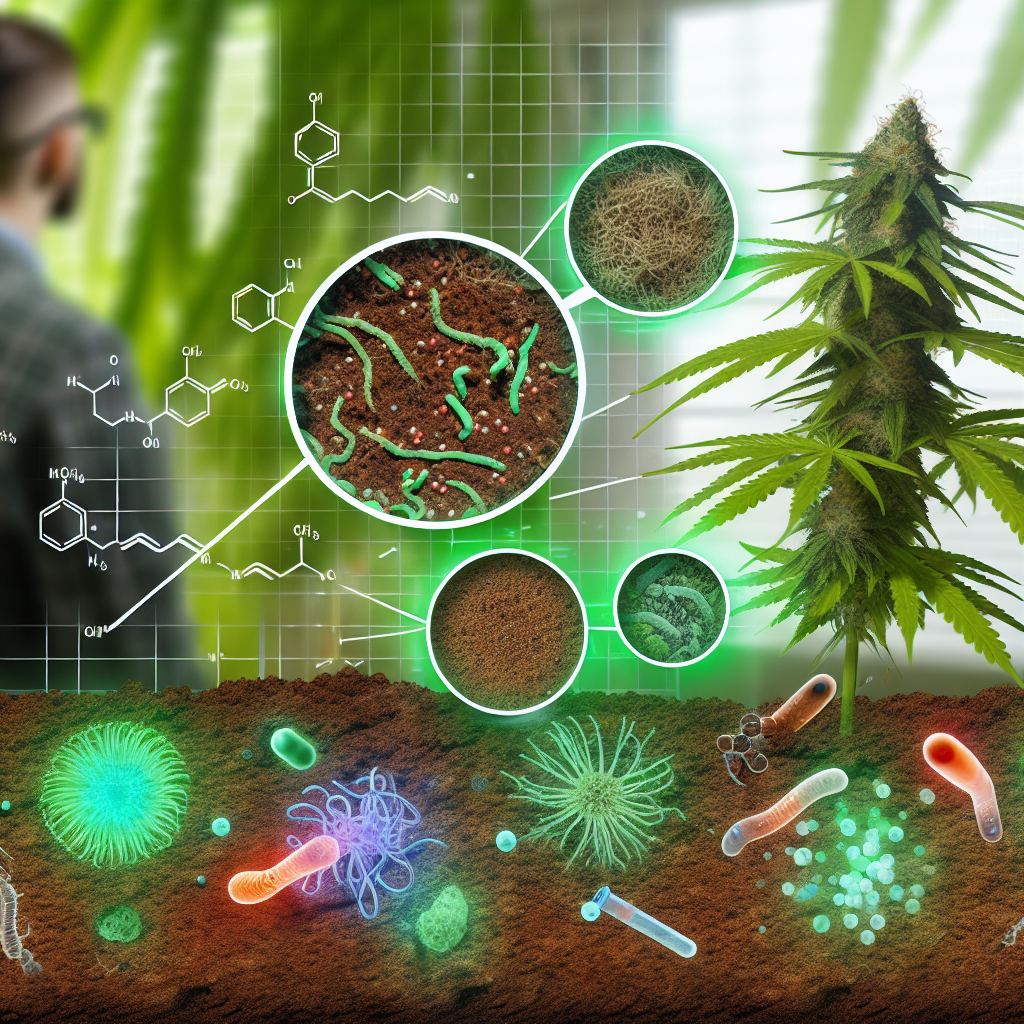
Harnessing Quantum Biology: Revolutionizing Cannabinoid Efficacy Through Bioelectric Fields
Introduction
In recent years, the intersection of quantum biology and cannabinoid science has emerged as a frontier promising to redefine our understanding of how cannabis compounds interact with biological systems. As the medical application of cannabis continues to gain momentum, the nuances of its efficacy remain under exploration. At the heart of this inquiry is the complex interaction between cannabinoids and cellular bioelectric fields—a confluence that holds the potential to revolutionize therapeutic outcomes.
Quantum biology is an innovative discipline that explores how quantum phenomena, like entanglement and superposition, affect biological processes. It challenges the classic biological framework by introducing principles from quantum mechanics to explain the intricacies of cellular functions. When applied to cannabinoid science, it offers fresh insights into the mechanisms that govern how cannabinoids, such as THC (tetrahydrocannabinol) and CBD (cannabidiol), produce their effects on the body.
Bioelectric fields refer to the natural electrical activity generated by cells and tissues, instrumental in communication, growth, and repair processes within the body. These fields actively influence cellular behavior and responsiveness to external stimuli, including phytochemicals like cannabinoids. By modifying bioelectric fields, we can potentially alter the way cells interact with cannabinoids, leading to an optimization of therapeutic benefits.
Current research suggests that through the modulation of bioelectric fields, it may be possible to enhance cannabinoid receptor sensitivity. This could amplify or tailor the effects of cannabis compounds, thus broadening their efficacy for both medical and recreational users. Moreover, understanding these interactions at a quantum level could unlock new pathways for treating disorders ranging from chronic pain to epilepsy.
The integration of quantum biology in cannabinoid science isn’t purely an academic exercise but a pragmatic approach aimed at increasing therapeutic precision and efficacy. As this nascent field develops, it heralds a paradigm shift in how medical professionals and researchers comprehend and harness the full potential of cannabinoids.
Features
Recent studies have begun to explore the implications of bioelectric fields and quantum biology in cellular signaling and homeostasis. Emerging research is shedding light on how these bioelectrical signals can be leveraged to enhance cannabinoid efficacy. Researchers from the [University of Manchester](https://www.manchester.ac.uk/research/publications) have demonstrated how quantum tunneling might impact electron transfer processes in biological systems. This has immediate implications for understanding how cannabinoids can modulate neuroreceptors more effectively, offering potential breakthroughs in treating neurological disorders.
A pivotal study published by the [National Center for Biotechnology Information (NCBI)](https://www.ncbi.nlm.nih.gov/pmc/articles/PMC5383784/) investigates the role of electromagnetic fields in modulating cannabinoid receptors. This research suggests that bioelectrical modulation could lead to more precise control over cannabinoid-induced effects, optimizing therapeutic regimens for patients suffering from conditions such as multiple sclerosis and chronic pain.
Furthermore, the [Scripps Research Institute](https://www.scripps.edu/science-technology/pubs) is pioneering studies on the bioelectric basis of cannabinoid receptor networks. These investigations focus on how subtle adjustments to cellular electrical fields can recalibrate receptor pathways, thus enhancing the pharmacodynamics of cannabinoids. Findings indicate that such recalibration could amplify desirable therapeutic outcomes while minimizing side effects—a significant advancement in cannabis-based therapeutics.
Additionally, quantum bioelectronics has become a compelling area for understanding cannabinoid interaction at a molecular level. A study conducted by [MIT’s Quantum Engineering Lab](https://www.mit.edu/research/quantum-engineering) dives into how quantum coherence might facilitate cannabinoid interactions with bioelectric fields across cell membranes, paving the way for breakthroughs in personalized cannabinoid therapies.
These pioneering studies underscore the potential of harnessing bioelectric fields to magnify the therapeutic benefits of cannabinoids. By aligning quantum biology with cannabinoid science, we are on the brink of a revolution that could vastly improve the efficacy of cannabis-based treatments.
Conclusion
As we traverse this exciting new landscape where quantum biology meets cannabinoid science, the promise of enhanced therapies is palpable. By synthesizing these advanced scientific domains, we open pathways to tailor cannabinoid efficacy like never before, offering hope for improved patient outcomes. As research evolves, harnessing bioelectric fields may soon become a cornerstone of optimized cannabis use, revolutionizing treatment paradigms across the medical field.
Concise Summary
Quantum biology and bioelectric fields are transforming cannabinoid science by elucidating how cannabinoids like THC and CBD interact with the body. Recent studies highlight the potential of bioelectric fields to enhance cannabinoid receptor sensitivity and efficacy. Research from institutions like the University of Manchester, NCBI, Scripps Research Institute, and MIT indicates that modulating these fields could optimize therapeutic outcomes for disorders such as epilepsy and chronic pain. This emerging field promises a revolution in cannabis-based treatments by combining quantum mechanics with biological processes.